TPO Roofing Installation and Repair in Western NC: What Commercial Property Owners Should Know
TPO Roofing Installation & Repair in Western NC
If you own or manage a commercial building in Western North Carolina, there’s a good chance your flat or low-slope roof is either already covered with TPO roofing or on the short list for replacement. TPO roofing in Western NC has become the go-to membrane system for a wide range of commercial applications, including office buildings, retail centers, warehouses, restaurants, and medical facilities — because it balances solid performance with a reasonable price point.
That said, TPO roofing is not a one-size-fits-all answer. WNC’s mountain climate creates conditions that test flat roofing systems more severely than those in most regions of the Southeast. Understanding what TPO roofing does well, where it has limitations, and what proper installation and maintenance look like will help you make better decisions about your commercial property.
What TPO Roofing Is and How It Works
TPO stands for thermoplastic polyolefin. It’s a single-ply roofing membrane — a single layer of flexible thermoplastic material manufactured in large rolls, typically 10 to 20 feet wide. The material combines polypropylene and ethylene-propylene rubber, which gives it flexibility, UV resistance, and heat-weldability at seams.
That last point matters a lot. TPO roofing seams are bonded using hot-air welding equipment, which fuses the overlapping membrane edges into a single continuous piece. A properly welded TPO seam is actually stronger than the membrane itself. This is one reason TPO roofing in Western NC holds up well against the heavy rain and wind the region sees — when installed correctly, there are very few points of vulnerability.
TPO roofing comes in standard thicknesses of 45-mil, 60-mil, and 80-mil. Thicker membranes offer better puncture resistance and longer service life. For commercial properties in WNC with frequent rooftop HVAC access, 60 mil is the commonly recommended minimum.
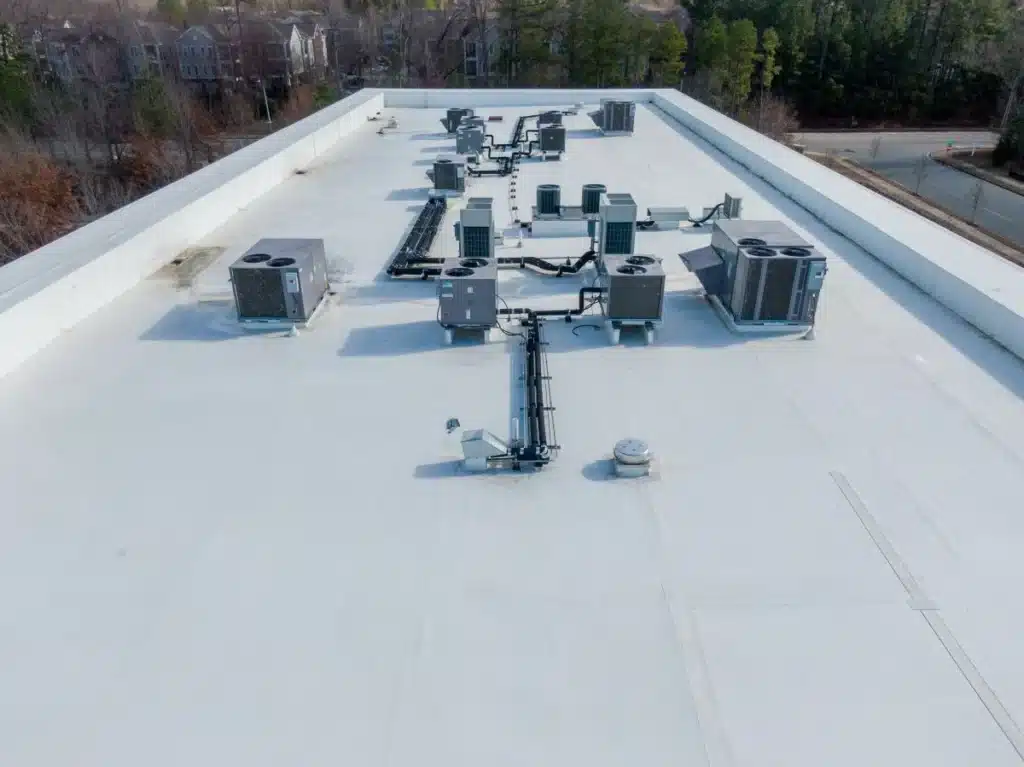
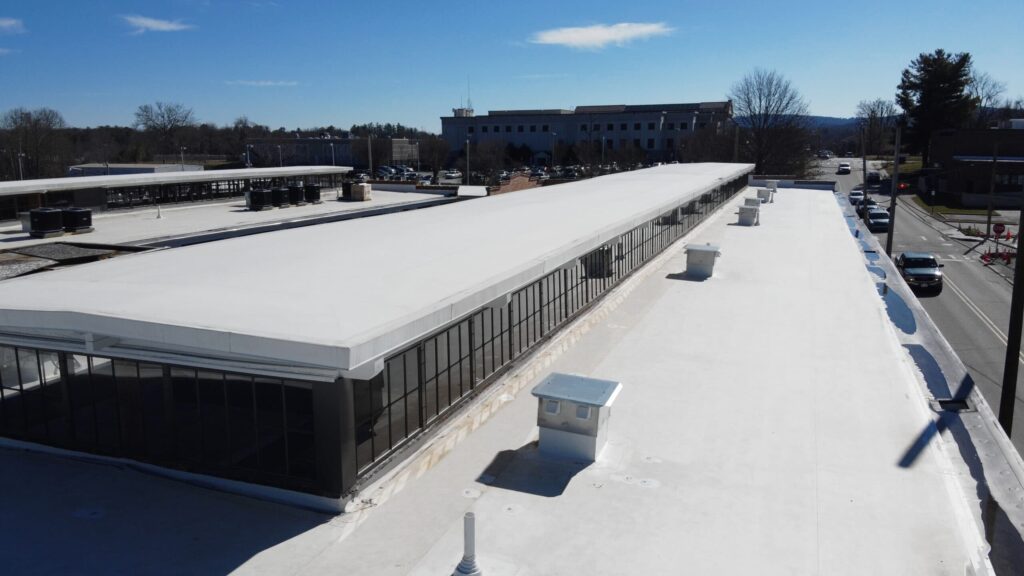
Standard TPO roofing is white, which reflects solar radiation rather than absorbing it. This reduces cooling loads in summer — a meaningful benefit for commercial buildings trying to manage energy costs. Gray and tan options are available, though they sacrifice some of the reflectivity benefit.
Why Commercial Property Owners in WNC Choose TPO Roofing
TPO roofing in Western NC is popular for a few straightforward reasons:
Cost relative to performance. Among the major single-ply membrane options, TPO typically has a lower installed cost than EPDM on large commercial roofs and is significantly less expensive than built-up or modified bitumen systems. For commercial property owners balancing capital budgets, that matters.
Energy performance. White TPO roofing installation reflects a significant portion of solar heat, which lowers cooling costs during Asheville’s warm seasons. Commercial buildings with large flat roof areas see meaningful reductions in HVAC load compared to darker membrane systems.
Weldable seams. Unlike EPDM, which uses adhesive or tape-bonded seams, TPO roofing seams are heat-welded. This creates a monolithic bond that holds up well over time when installed by an experienced contractor.
Lightweight. TPO roofing systems impose a minimal structural load compared to built-up roofing or ballasted modified bitumen. This makes TPO roofing installation a practical choice for buildings with limited structural capacity for heavier systems.
Chemical resistance. Commercial roofs are exposed to a range of chemical pollutants — exhaust, grease-laden air from restaurant ventilation, and HVAC refrigerant releases. TPO roofing handles chemical exposure better than many alternatives.
TPO Roofing Installation in Western NC: What to Expect
TPO roofing installation follows a defined sequence. Knowing what’s involved helps commercial property owners evaluate contractor bids and understand why shortcuts are a problem.
Deck Preparation
Before any membrane goes down, the roof deck needs to be in sound condition. Soft spots, rot, and moisture damage in the substrate will cause problems regardless of what membrane covers them. Secure Roofing inspects and addresses deck issues before installation begins — skipping this step is one of the most common ways inexperienced contractors create future liability for property owners.
Insulation
Commercial TPO roofing systems almost always include rigid foam insulation installed above the deck. Polyisocyanurate (polyiso) board is the most common choice in WNC commercial applications. Insulation thickness is selected based on energy code requirements and the property owner’s performance goals. Tapered insulation — thicker at the center, thinner at the drains can also be used to improve the drainage slope on roofs with existing ponding issues.
Membrane Installation
TPO roofing membrane is rolled out across the insulation and attached using one of three methods: fully adhered (bonded to the substrate with adhesive), mechanically attached (fastened through the insulation to the deck at regular intervals), or ballasted (held in place by stone or pavers). Mechanically attached TPO roofing installation is the most common approach on commercial buildings in WNC.
Once the field membrane is in place, seams are welded using hot-air welding equipment. This is a skill-dependent process — weld temperature, speed, and pressure all affect seam quality. Under-welded seams delaminate. Over-welded seams can char and weaken. A qualified contractor runs test welds and checks finished seams throughout the job.
Flashings and Penetrations
This is where TPO roofing installation gets detail-intensive. Every penetration through the membrane — drain collars, HVAC curbs, pipe boots, skylights, parapet walls — requires custom flashing work. TPO roofing flashing is typically fabricated from the same membrane material and heat-welded into the field membrane. Getting this right takes time. It’s also where inexperienced contractors cut corners that show up as leaks within a year or two.
Drainage Integration
TPO roofing installation in Western NC needs to efficiently move water off the roof. Asheville averages over 45 inches of rainfall annually, with heavy storm events that can deliver several inches in a few hours. Drain placement, sizing, and screen maintenance all factor into how well the system performs over the long term. Proper edge drainage relies on correctly sized gutters — ourgutter installation services are often part of a complete flat roof project.
TPO Roofing Repair: Common Problems and What Causes Them
TPO roofing in Western NC holds up well when installed correctly and maintained regularly. When problems occur, they tend to fall into a few categories.
Seam failures. The most common TPO roofing repair call. Seams that were under-welded during installation, or that have experienced stress from thermal movement or wind uplift, can separate or develop voids. A seam failure caught early is a straightforward repair. One that’s ignored long enough to allow water infiltration into the insulation is a much larger problem.
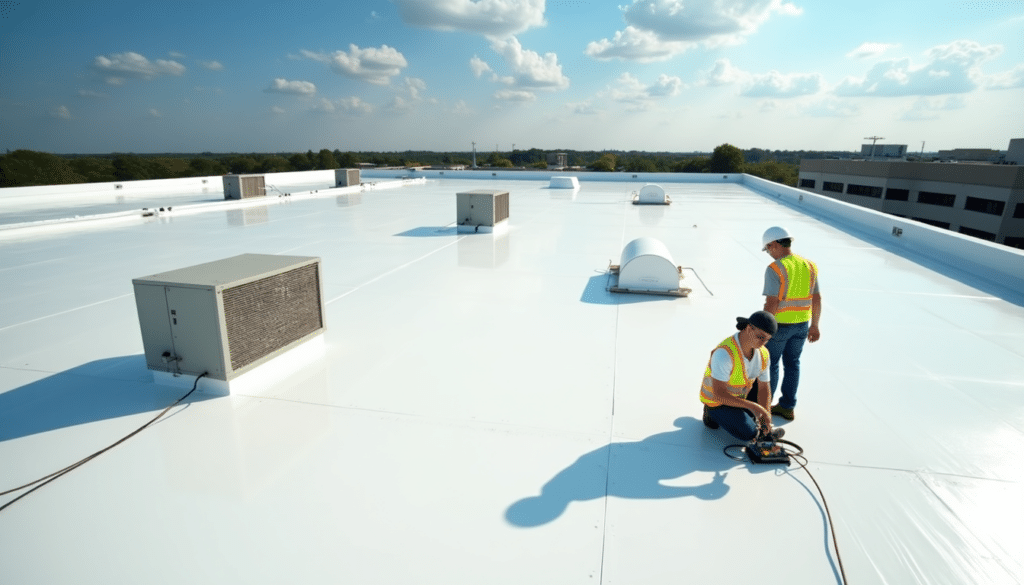
Membrane punctures. Foot traffic from HVAC technicians is the most common cause of punctures in TPO roofing installations on commercial buildings. Sharp tools, equipment feet, and debris can all penetrate the membrane. Punctures are easy to repair when found early — a patch of TPO membrane heat-welded over the damage restores integrity.
Flashing failures. TPO roofing flashings at walls, curbs, and penetrations experience more movement stress than the field membrane. Flashings that weren’t properly adhered or welded during installation will eventually lift, allowing water to seep beneath the membrane edge.
Shrinkage. Some TPO roofing installation formulations are more prone to shrinkage than others, particularly older products. Shrinkage pulls the membrane away from flashings and termination points. If you have an older TPO roof and are seeing gaps at the edges, shrinkage may be the cause.
Ponding water damage. Standing water on TPO roofing accelerates degradation. Water that remains for more than 48 hours after rainfall indicates a drainage problem. Algae growth on white TPO roofing is often the first visible sign of chronic ponding. Ourroof repair services include assessment of drainage issues alongside membrane repair.
WNC Climate Considerations for TPO Roofing
TPO roofing in Western NC faces specific environmental conditions that commercial property owners should understand.
Freeze-thaw cycling. At Asheville’s elevation and across the higher elevations of WNC, temperatures cycle above and below freezing repeatedly during winter and early spring. Water that enters a seam gap or a flashing void expands as it freezes, enlarging the gap with each freeze-thaw cycle. This is one reason prompt attention to small TPO roofing repairs matters in this region.
UV intensity at elevation. Higher elevations receive more intense ultraviolet radiation than lower-lying areas. While TPO roofing installation is designed to resist UV degradation, this intensity warrants factoring into membrane thickness selection and inspection frequency.
Wind uplift. Mountainous terrain creates wind patterns that differ from those in flat terrain. Wind can channel through gaps, creating uplift pressure at membrane edges and seams. Properly specified mechanical attachment patterns account for local wind loads.
Heavy rainfall volumes. WNC storm events can be intense. TPO roofing drainage systems need to be sized and maintained for peak flow, not just average conditions. After significant storms, a post-storm inspection of TPO roofing installation flashings and edge terminations is good practice.
How Long Does TPO Roofing Last in Western NC?
A properly installed TPO roofing system in WNC typically lasts 15 to 25 years, depending on membrane thickness, installation quality, maintenance practices, and rooftop traffic. Thicker membranes (60-mil and 80-mil) consistently outperform 45-mil products in longevity.
The biggest variable is maintenance. TPO roofing installations that receive biannual inspections and prompt repairs of minor issues regularly reach the upper end of that range. TPO roofing that’s ignored until there’s a visible leak often fails well before then.
Secure Roofing recommends scheduling TPO roofing inspections twice per year — once in spring, after the freeze-thaw season, and once in fall, before winter. For roofs that show surface wear but remain structurally sound, our Roof Maxx treatment is worth considering as a life-extension option before committing to a full replacement.
Frequently Asked Questions: TPO Roofing in Western NC
Is TPO roofing a good choice for commercial buildings in Asheville?
Yes, for most commercial applications. TPO roofing in Western NC performs well on warehouses, office buildings, retail centers, and similar structures. It manages the region’s rainfall volume, offers energy-efficiency benefits from its reflective surface, and is cost-competitive with other flat-roof systems. The key is qualified installation — seam quality determines most of the long-term performance.
How do I know if my TPO roof needs repair or replacement?
If problems are isolated — a failed seam, a puncture, localized flashing damage — repair is typically the right answer. If the membrane has widespread cracking or shrinkage, multiple active leaks in different roof areas, or saturated insulation beneath the membrane, replacement is usually the more practical option. Ourroof replacement team can assess which option makes sense for your building.
Can TPO roofing be installed over an existing flat roof?
In some cases, yes. An overlay installation can work if the existing substrate is dry, structurally sound, and relatively flat. Most roofing codes allow a maximum of two roofing layers before a full tear-off is required. We assess the existing condition before recommending overlay versus tear-off.
Does Secure Roofing offer financing for TPO roofing projects?
Yes. We’ve partnered with Service Finance and Advancial Federal Credit Union for flexible financing options, including a 12-month same-as-cash option. See ourfinancing page for details. Veterans, first responders, and seniors also receive a 10% discount.
What other flat roof systems does Secure Roofing install?
Beyond TPO roofing, we install and repair EPDM, modified bitumen, built-up roofing, and spray-applied coating systems. Ourcommercial roofing services cover the full range of flat and low-slope applications for WNC property owners.
Schedule a Free TPO Roofing Estimate in Western NC
Secure Roofing serves commercial property owners acrossAsheville,Hendersonville,Black Mountain,Brevard, Waynesville, Canton, and the broader WNC region. Our team is fully licensed and insured, and we back TPO roofing installations with a workmanship guarantee.
If your commercial property has a flat or low-slope roof whether you’re looking at a new TPO roofing installation, need a repair diagnosed, or want an honest assessment of how much life your current system has left we’re the right call.