
Emergency Roofing Services Asheville NC
Emergency Roofing Services in Asheville, NC: Fast Response for Flat, Low-Slope & Storm-Damaged Roofs
When your roof fails, every hour counts. Secure Roofing provides emergency roofing services in Asheville, NC and throughout Western North Carolina, covering urgent repairs, full replacements, and preventive maintenance for flat roofs, low-slope systems, and pitched roofs on both residential and commercial properties. If your building is exposed right now, we can help you stop the damage fast.
What Counts as a Roofing Emergency in Asheville?
A roofing emergency in Asheville is any situation where active water intrusion, structural exposure, or visible membrane failure puts your building at risk of compounding damage if left unaddressed for more than 24 to 48 hours. Western North Carolina’s mountain weather, including heavy rain, sudden temperature swings, ice, and wind events, accelerates that timeline significantly for flat and low-slope roofs.
Common emergency situations Secure Roofing responds to across the Asheville area include:
- Storm damage: High winds, hail, and falling tree limbs that puncture membranes or displace flashing
- Active leaks: Water entering the building through failed seams, cracked flashings, or deteriorated membrane
- Ponding water buildup: Standing water that has exceeded 48 hours and is accelerating membrane breakdown
- Membrane blow-off: Sections of TPO, EPDM, or modified bitumen that have lifted or separated from the deck
- Flashing failures at penetrations: HVAC curbs, pipe boots, and skylights that are no longer sealed
If you are seeing any of these conditions on your Asheville property, the practical next step is a same-day inspection rather than waiting to see whether the problem gets worse. Water damage compounds. A membrane repair that costs a few hundred dollars today can become a full deck replacement if ignored through another rain event.
Emergency Roofing Services Asheville: Our Response Process
Secure Roofing’s emergency response process begins with a free on-site assessment of the damage, a clear explanation of what we found, and a straight answer about whether emergency repair or temporary protection makes the most sense for your building before permanent work begins.
Here is how we handle urgent roofing calls across Asheville, NC and the surrounding WNC communities:
- Initial call and triage. When you contact us, we gather basic information about the building type, the visible symptoms, and how long the situation has been active. This helps us arrive with the right materials and crew.
- On-site damage assessment. A licensed contractor inspects the roof surface, checks the deck for moisture intrusion, and identifies all failure points including seams, flashings, penetrations, and drainage.
- Temporary protection if needed. When permanent repair cannot happen the same day due to weather conditions or material lead times, we install temporary protection to stop active water entry.
- Written scope of work. Before any permanent repair begins, you receive a written explanation of what needs to be done, why, and what it will cost. No surprise invoices.
- Repair or replacement execution. Our crews handle the approved scope using materials matched to your existing system, whether that is TPO, EPDM, modified bitumen, built-up roofing, or a spray-applied coating.
- Final inspection and documentation. We walk the completed work with you, confirm all seams and termination points are secure, and verify that drainage is functioning correctly.
Secure Roofing is licensed and insured in North Carolina and South Carolina, serving homeowners and commercial property owners from Asheville and Hendersonville to Waynesville, Brevard, Morganton, Greenville SC, and Spartanburg SC.
Flat Roof & Low-Slope Emergency Repairs: TPO Roofing Asheville Contractors
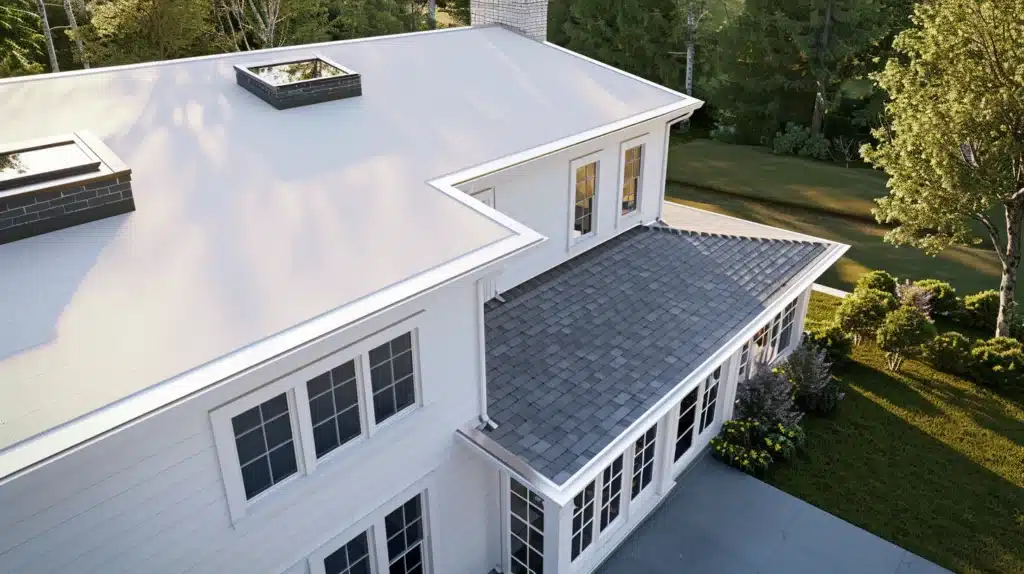
Flat and low-slope roofs are the most common source of emergency calls Secure Roofing receives in Asheville because their failure mode is often invisible until water is already inside the building. TPO roofing is the most widely installed membrane system on commercial buildings in the Asheville area, and it is also one of the most commonly repaired.
TPO, or thermoplastic polyolefin, is a single-ply membrane heat-welded at the seams to create a watertight bond. When those seams are installed correctly by an experienced TPO roofing contractor in Asheville, the system performs well for 15 to 25 years depending on membrane thickness and weather exposure. When seams are rushed or improperly welded, the failure point is predictable and it shows up as a leak, usually after a heavy rain event.
In addition to TPO, Secure Roofing handles emergency repair work on:
- EPDM (synthetic rubber membrane): Flexible, proven in WNC’s freeze-thaw cycles, and typically adhered at seams with tape or adhesive rather than heat
- Modified bitumen: Asphalt-based membrane that handles foot traffic and temperature swings well, common on commercial roofs and additions throughout Asheville and Hendersonville
- Built-up roofing (BUR): Older commercial flat roofs with multiple alternating layers of felt and asphalt, sometimes referred to as tar and gravel roofs
- Spray-applied coatings and SPF: Seamless restoration systems that can extend roof life without full tear-off when the deck is structurally intact
For flat roofs, the critical rule in Asheville’s mountain climate is that standing water sitting for more than 48 hours after rain is a drainage problem that needs to be corrected, not monitored. Ponding water accelerates membrane degradation faster than almost any other single factor.
Our roof repair services cover both flat and pitched systems across Western North Carolina. If the system has reached the end of its serviceable life, our roof replacement services apply to flat and low-slope systems as well.
What Makes a Flat Roof Emergency Worse: Common Failure Points
The most expensive flat roof repairs in Asheville are almost always situations that started small and were not addressed before the next rain. Understanding the specific failure points that lead to emergency calls helps property owners recognize warning signs before a minor repair becomes a deck replacement.
- Seam failures: Heat-welded or adhered seams that have separated, lifted, or developed voids are the most common repair category on TPO and single-ply systems. A separated seam in good weather becomes an active leak in the next storm.
- Membrane punctures: HVAC technicians accessing rooftop equipment, foot traffic, and falling branches are frequent culprits. Small punctures are straightforward to patch when caught early and structurally damaging when ignored through multiple rain events.
- Flashing failures: Where the membrane meets walls, curbs, skylights, and pipe penetrations, flashing deteriorates on its own schedule and is one of the most consistent leak sources on otherwise sound roofs across the Asheville area.
- Blistering and bubbling: Moisture or gas trapped beneath the membrane creates blisters that need to be opened, dried, and re-patched before they spread across the field of the roof.
- Drainage blockages: Blocked interior drains or scuppers cause rapid water buildup on flat roofs. Properly functioning gutters and drains are not optional on low-slope systems. See our gutter installation services for edge-drainage solutions.
If you manage a commercial property in Asheville, Waynesville, Canton, or the surrounding WNC area, a scheduled annual inspection catches most of these issues before they become emergencies. If you are already past that point, the practical answer is a same-day call.
Commercial TPO Roofing Contractor Asheville: Installation and Replacement

Secure Roofing installs TPO and other flat roof membrane systems on commercial buildings throughout the Asheville, NC metro and Western North Carolina, handling both new construction and full replacement projects for property owners who need a licensed, insured commercial roofing contractor.
When Secure Roofing installs a flat roof in Asheville or the surrounding area, the process starts with a free consultation and a thorough assessment of the existing structure. The steps are consistent across system types:
- Deck inspection and preparation. The roof deck must be structurally sound and free of rot, soft spots, or moisture damage before any membrane goes down. Problems at the deck level do not improve after they are covered.
- Insulation layer. Most commercial flat roofs include rigid foam insulation installed above the deck. The type and thickness of insulation affect the R-value and overall system performance.
- Membrane installation. Depending on the system selected, the membrane is rolled out and adhered, heat-welded, torch-applied, or sprayed. Seams, edges, penetrations, and flashings require careful attention because these are the areas where leaks start when installation is rushed.
- Drainage integration. Interior drains, scuppers, or gutters are integrated at this stage. Getting drainage right during installation is significantly less expensive than correcting it after the fact.
- Final inspection. A qualified contractor walks the completed roof, checks all seams and termination points, and confirms proper drainage before sign-off.
Our commercial roofing services cover new installation, replacement, and emergency repair work. For buildings where the existing membrane is structurally intact but losing surface protection, spray-applied coatings and our Roof Maxx service offer restoration options that extend roof life without a full tear-off. Our metal roofing crews also work alongside our flat-roof teams on complex commercial projects that involve multiple roof types.
When to Replace Instead of Repair: Honest Guidance for Asheville Property Owners
Repair stops making financial sense when the cost of addressing individual failure points is approaching the cost of a new membrane system, or when the underlying deck or insulation has been compromised by long-term moisture intrusion. Secure Roofing presents this assessment in plain language without pressure.
Signs that replacement is the more practical option than continued repair:
- Multiple active leaks in different areas of the roof that cannot be traced to a single failure point
- Widespread membrane shrinkage, cracking, or surface alligatoring across the field of the roof
- Saturated insulation beneath the membrane confirmed by moisture scanning or core sampling
- The roof system has reached or exceeded its expected service life for its membrane type
- Previous re-roofing layers prevent additional overlay under local building codes
When Secure Roofing recommends replacement to property owners in Asheville, NC and Western North Carolina, the recommendation comes with a clear explanation: here is what we found, why ongoing repair will not solve it long-term, and what your system options are. The decision belongs to you. Our role is to give you the accurate information you need to make it confidently.
Service Area: Emergency Roofing Services Across Western North Carolina and Upstate South Carolina
Secure Roofing provides emergency roofing services in Asheville and responds to urgent repair calls throughout the full Western North Carolina region and into Upstate South Carolina. If your property is in one of the communities below, we can reach you.
North Carolina service area includes: Asheville, Arden, Black Mountain, Brevard, Candler, Canton, Cashiers, Cherokee, Clyde, Cullowhee, Enka, Fairview, Hendersonville, Flat Rock, Fletcher, Lake Lure, Lake Toxaway, Marion, Mars Hill, Marshall, Morganton, Old Fort, Pisgah Forest, Rutherfordton, Sapphire, Tryon, Waynesville, and Woodfin.
South Carolina service area includes: Anderson, Greenville, Inman, Spartanburg, Travelers Rest, and Union.
Both residential and commercial properties are served. Licensing and insurance are current in both states.
Frequently Asked Questions
How quickly can Secure Roofing respond to an emergency roofing situation in Asheville?
Response time depends on current crew availability and weather conditions, but Secure Roofing prioritizes emergency calls for active leaks and storm damage across the Asheville area. When you call, you will speak with someone who can assess the urgency of your situation and tell you realistically when a crew can arrive. If same-day permanent repair is not possible due to weather, temporary protection can often be installed to stop active water entry while permanent materials are staged.
What is the difference between emergency roof repair and a temporary fix?
Emergency roof repair addresses the actual failure point using permanent materials matched to your existing roofing system, whether that is a heat-welded TPO seam repair, a flashing replacement, or a membrane patch on an EPDM system. A temporary fix, sometimes called a tarp-over or emergency sealant application, stops active water intrusion until weather conditions or material availability allow for permanent repair. Secure Roofing will tell you clearly which approach applies to your situation and what the permanent solution will involve.
Does my homeowner’s or commercial property insurance cover emergency roofing repairs in Asheville?
Coverage depends on your specific policy and the cause of the damage. Storm damage, including wind, hail, and falling tree limbs, is typically covered under standard homeowner’s and commercial property policies subject to your deductible. Damage resulting from deferred maintenance or a roof that has exceeded its expected service life is less likely to be covered. Secure Roofing can provide written documentation of the damage, the cause, and the scope of repair needed, which is useful when filing a claim with your insurer.
How long do TPO flat roofs last in Asheville’s climate?
TPO membranes installed correctly by an experienced flat roofing contractor typically perform well for 15 to 25 years, depending on membrane thickness, UV exposure, and how the roof is maintained. Asheville’s mountain climate introduces specific stressors including freeze-thaw cycling, heavy seasonal rainfall, and temperature swings that can shorten service life on improperly installed systems. Regular inspections, prompt repair of minor failures, and proper drainage management extend TPO roof life significantly.
What flat roof systems work best for commercial buildings in Western North Carolina?
TPO is the most commonly installed membrane system on commercial buildings in the Asheville area because it balances performance, energy efficiency, and installed cost across a wide range of building types. EPDM is a proven alternative with strong freeze-thaw performance. Modified bitumen handles foot traffic well and suits buildings with frequent rooftop maintenance access. Built-up roofing remains a viable option for structures with the deck capacity to support its weight. The right choice depends on your building’s structure, drainage design, expected maintenance access, and budget. Secure Roofing discusses all applicable options during the free initial assessment.
Call Us 828-888-ROOF
If your Asheville property needs emergency roofing services right now, or if you want a free assessment before a problem becomes urgent, Secure Roofing is ready to help. We serve homeowners and commercial property owners across Western North Carolina and Upstate South Carolina with licensed, insured roofing work and straight answers about what your roof actually needs. Reach out by phone or through our contact form to schedule your free inspection. Call Us 828-888-ROOF.