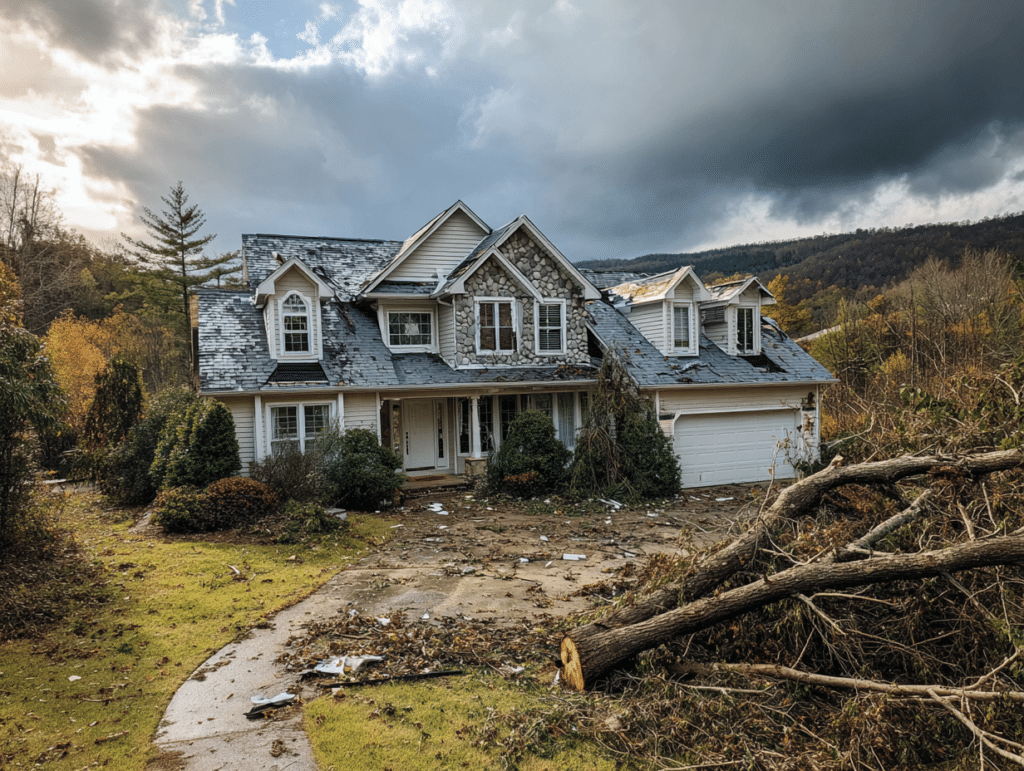
What to Do After Storm Damage: A WNC Homeowner’s Guide
A severe storm just passed through. The wind was strong, you heard something hit the roof, and now you are standing in your yard looking up at your house wondering what just happened. Or maybe the storm seemed mild but you are noticing water stains on your ceiling that were not there before.
What you do in the hours and days after a storm matters. It affects how quickly your roof gets repaired, how smoothly your insurance claim goes, and whether any secondary damage gets stopped before it gets worse.
This guide walks through the right sequence of steps after a storm event in Western North Carolina, from the initial safety check through the insurance and repair process.
Step 1: Wait for Safe Conditions
This may seem obvious, but it is worth stating: do not go on or near your roof while a storm is still active or immediately after. Wet roofing surfaces are dangerously slippery, and downed power lines or unstable trees near the structure create additional hazards.
Once conditions are safe, you can do a ground-level visual inspection. Walk around the perimeter of your home and look for:
Missing, lifted, or displaced shingles
Pieces of roofing material in the yard or driveway
Damage to gutters or downspouts
Debris that has landed on the roof surface
Broken or hanging soffits or fascia
Damage to chimneys, vents, or skylights
Take photos of everything you can see from the ground. This documentation is useful for your insurance claim and gives your roofing contractor a starting point before they get on the roof.
Step 2: Check the Interior
Head to your attic with a flashlight and look for any signs of moisture intrusion. Water stains on the decking or insulation, actual wetness, or daylight visible through the roof structure all indicate damage that needs attention quickly.
Check your ceilings throughout the home for new water stains, particularly on upper floors and in rooms near the outer walls. Stains that were not there before the storm are a signal worth acting on immediately.
If you find active water intrusion, place containers or lay down towels as needed, but understand this is temporary management while you get a contractor on-site, not a long-term solution.
Step 3: Document Everything Before Any Cleanup
Before you remove debris, cover anything, or do any cleanup at all, document what you find. Photograph damage from multiple angles and include wide shots that show the full scope alongside close-up shots that show specific damage clearly. If you can capture the date and time stamp in the image metadata, that helps establish timeline for your insurance claim.
This applies to interior and exterior damage. Photograph ceiling stains, wet insulation, any water accumulation on the attic floor, damaged gutters, and anything else you can document.
Do not underestimate this step. Insurance adjusters work from documentation, and having clear photographic evidence of the damage as it appeared immediately after the storm can significantly affect claim outcomes.
Step 4: Contact Your Insurance Company
Most homeowner’s insurance policies require that you report damage promptly. Check your policy for the specific timeframe, but in general, the sooner you notify your insurance company after a storm, the better.
When you call, you will typically:
Report that you have experienced storm-related damage
Receive a claim number
Be told an adjuster will be assigned to assess the damage
Get a timeframe for when the adjuster will visit
Ask specifically whether there are emergency temporary repair provisions in your policy. Many policies allow you to make emergency repairs to prevent further damage before the adjuster visits, with the cost covered as part of the claim. If you have active water intrusion, this provision is important to understand.
Step 5: Contact a Licensed Roofing Contractor
Get a roofing contractor on-site before your insurance adjuster visits if at all possible. A licensed contractor can provide:
A professional inspection that documents damage more thoroughly than a ground-level assessment
A written estimate of repair or replacement costs
Expertise in identifying storm-related damage that might not be obvious to an adjuster who is not a roofing specialist
This is not about creating conflict with your insurance company. It is about ensuring that a roofing professional’s assessment is part of the documentation when your adjuster makes their determination. Adjusters deal with many trades and many types of claims. A licensed roofer who works with your roof specifically every day has expertise the adjuster does not.
Our team works with all insurance companies and is experienced in the documentation process. We can be on-site quickly after a storm event, and we are available 24/7 for emergency situations.
Step 6: Temporary Protection if Needed
If the damage has created an active opening or if significant rain is expected before permanent repairs can happen, temporary tarping can prevent additional interior water damage. This is a service licensed contractors provide. Do not let anyone unfamiliar with proper tarp installation attempt this, as improperly installed tarps can create additional damage and may complicate your insurance claim.
Your insurance policy’s emergency repair provisions may cover this cost. Confirm with your adjuster.
Step 7: Get the Inspection and Estimate in Writing
Once your contractor has completed their inspection, request a detailed written estimate that itemizes the damage found, the repair or replacement scope, and the associated costs. This document serves multiple purposes: it is part of your insurance claim package, it is your reference for understanding what is being done and why, and it is the basis for your final contract once work is approved.
A reputable contractor provides this clearly and without pressure. There is no reason to rush you into signing anything before you understand what is in the estimate.
Step 8: Understand the Adjuster’s Determination
After your adjuster visits, you will receive a determination that includes what your insurance company will cover and the amount they will pay, which is typically the replacement cost less your deductible and any applicable depreciation for the age of the roof.
If you believe the determination does not accurately reflect the damage documented in your contractor’s assessment, you have the right to request a re-inspection or work through your contractor’s documented estimate to identify any discrepancies. This is a normal part of the claims process and does not require confrontation or a public adjuster in most straightforward storm damage situations.
Avoiding Storm-Chasing Contractors
After a significant weather event, out-of-area contractors sometimes move into affected regions specifically to target homeowners dealing with insurance claims. Some of these operations are legitimate. Many are not.
Red flags to watch for:
Contractors who show up at your door unsolicited and pressure you to sign something immediately
Requests to sign over your insurance benefits to the contractor
No verifiable local address, business license, or insurance documentation
Prices that seem unusually low compared to other estimates
Verbal-only commitments with no written contract
A licensed, insured, and locally-established contractor has a reputation to protect in your community. They are easy to verify through your state’s contractor licensing board, and they are not going to disappear after collecting a payment.
Frequently Asked Questions
How long do I have to file a storm damage insurance claim in North Carolina?
Most homeowner’s insurance policies allow one to three years from the date of loss to file a claim, though some have shorter windows. Check your specific policy, and when in doubt, report sooner rather than later. There is no penalty for reporting damage early.
What if the adjuster and the contractor’s estimate disagree significantly?
This happens. Your contractor’s written estimate is your best documentation for requesting a reconsideration. You can ask your insurance company to review specific line items. In more complex disputes, a licensed public adjuster can serve as an advocate on your behalf, though they charge a fee typically as a percentage of the claim amount.
My neighbor had the same storm I did and filed a claim. Should I file even if my damage seems minor?
Yes. Even what appears to be minor damage should be inspected and documented. Hail damage in particular is often not visible from the ground and can affect the long-term performance of your roof significantly. Documenting it now protects you from finding out years later that the damage voided your shingle warranty.
How quickly can Secure Roofing respond after a storm?
We are available 24/7 for emergency situations. For standard storm inspections, we work to get on-site quickly, particularly in the period immediately following significant weather events when inspection demand is high. Calling early gets you on the schedule sooner.
Can I make repairs myself before the adjuster comes?
Most insurance policies allow emergency repairs to prevent further damage, but document everything before making any changes. Photograph the damage in its original state, keep all receipts for any materials purchased, and communicate with your insurance company about what you have done. Full repair work before the adjuster visits without prior communication with your insurer can complicate the claim.
Taking the Right Steps After a Storm
The homeowners who navigate storm damage most smoothly are the ones who document quickly, report to their insurance company promptly, get a licensed contractor involved before the adjuster visits, and avoid making rushed decisions under pressure.
Our team has helped homeowners throughout Asheville, Hendersonville, Fletcher, Black Mountain, Brevard, and across Western North Carolina and the South Carolina upstate work through storm damage from start to finish. We are licensed, insured, and we work with all insurance companies.
If you have experienced storm damage or suspect you might have, contact Secure Roofing or call 828-888-ROOF. You can also review our roof repair services to understand what we handle. We are available around the clock when you need us.
Schedule OurService
Our Services
Contact Our Roofing Team
Ask Secure Roofing today for an appointment. Call us or fill out the form to get started.