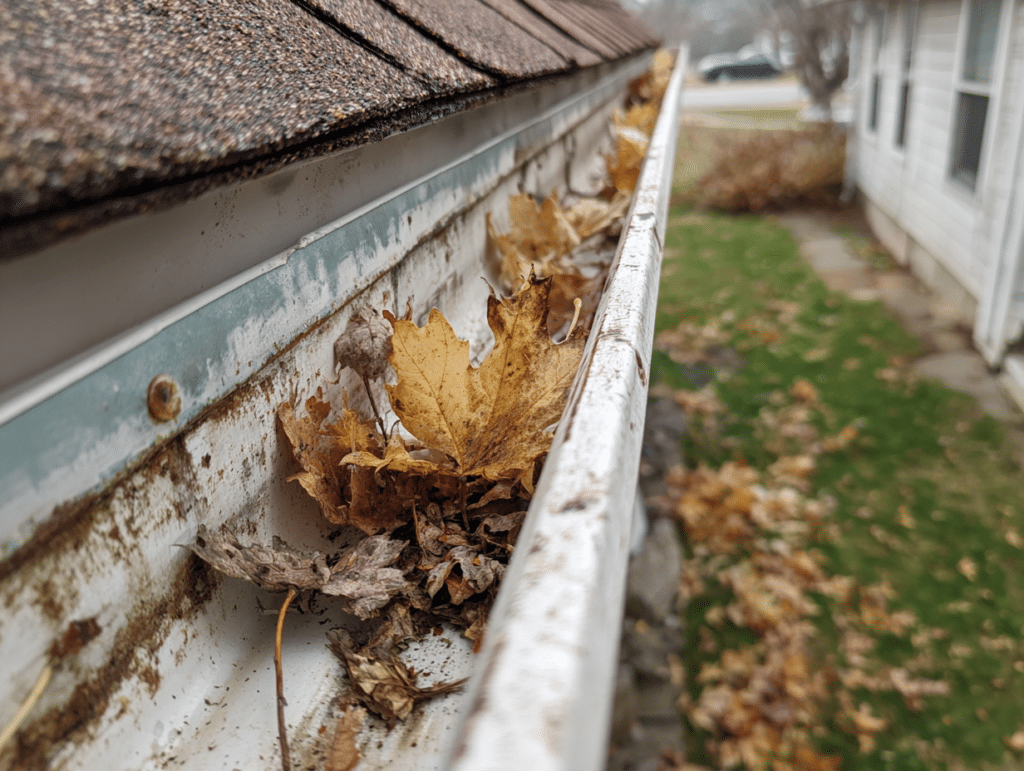
8 Signs Your Gutters Are Failing Before They Cause Damage
Gutters are easy to ignore. When they are doing their job properly, you barely notice them. When they are not, you might not notice until something has already gone wrong with your roof, your foundation, or the siding on your home.
The good news is that failing gutters almost always give you warning signs well before they create serious structural problems. Knowing what to look for, and when those signs call for repair versus full replacement, can save you a significant amount of money and headache.
Why Gutters Matter More Than Most Homeowners Think
A properly functioning gutter system does one job: move water away from your home efficiently. It collects runoff from the roof surface, channels it to downspouts, and deposits it away from the foundation and exterior walls.
When that process breaks down, water ends up in places it should not be. Against your foundation, where it can cause settling and cracking over time. Against your fascia boards and siding, where it causes rot. Back up along the roofline, where it can work under shingles. In your basement or crawlspace. None of these are small problems, and all of them trace back to gutters that are not doing their job.
Western North Carolina’s rainfall is substantial. The region averages over 40 inches per year in lower-elevation areas, with some mountain locations receiving well over 60 inches. During heavy rain events, gutters that are partially blocked or structurally compromised cannot keep up. The failures that follow tend to be sudden and obvious.
Sign 1: Gutters Are Overflowing During Rain
Standing at your home during a moderate to heavy rain and watching water pour over the sides of your gutters rather than flowing through them is the clearest possible signal that something is wrong. The cause could be a blockage, inadequate pitch, or gutters that have settled and no longer slope properly toward the downspouts.
If you see this happening, do not assume it resolves itself. Water cascading from overflowing gutters lands directly against your foundation walls repeatedly, which is exactly the scenario gutters are designed to prevent.
Sign 2: Gutters Are Pulling Away from the Fascia
Gutters that are separating from the house along the roofline are not just an aesthetic problem. When they pull away, gaps form that allow water behind the gutter and against the fascia board. Over time, fascia rot is the predictable result.
This separation is often caused by the weight of water and debris in clogged gutters, by fasteners that have worked loose over years, or by fascia boards that have already begun to rot and can no longer hold the fastener securely. Addressing this early, before the fascia is significantly damaged, is considerably less expensive than waiting.
Sign 3: Visible Rust, Cracking, or Holes
Metal gutters, particularly older galvanized steel systems, are susceptible to rust and corrosion over time. Small holes and cracks allow water to drip behind and below the gutter rather than channeling to the downspout.
Minor pinholes can sometimes be sealed with appropriate caulk or patch material, but rust that has spread across sections of the gutter means those sections need replacement. Patching extensively rusted gutters is a temporary measure at best.
Vinyl gutters crack rather than rust, particularly after years of UV exposure and temperature cycling. The cracks are usually easier to spot than rust damage, and the repair logic is similar: small isolated cracks can sometimes be sealed, but widespread cracking means replacement.
Sign 4: Standing Water in the Gutters
After rain stops, walk around your home and look at your gutters. If water is sitting in them an hour or more after the rain has ended, the gutters are not draining properly. This could mean a clog in the downspout, a section of gutter with no slope, or a downspout that is undersized for the volume of water it handles.
Standing water in gutters accelerates rust in metal systems, creates ideal conditions for mosquito breeding, and adds weight stress that contributes to the pulling-away issue covered above. It also encourages organic growth, including the moss and mold that can eventually find their way onto your roof surface.
Sign 5: Paint Peeling or Staining on Exterior Walls
Streaks of rust-colored or dirty staining running down your siding below the gutter line usually indicate that water has been overflowing or leaking at the same spots consistently. Paint peeling in the same areas points to chronic moisture exposure from gutter overflow.
These stains tell you exactly where your gutter system is failing. They also serve as a warning that your siding may be accumulating moisture damage even if you cannot see it from the outside yet.
Sign 6: Water in Your Basement or Crawlspace
This one requires some detective work because there are multiple potential sources of basement or crawlspace moisture. But if you notice water intrusion along the walls rather than through the floor, and your gutters are clogged or compromised, the two things are likely connected.
Water that consistently deposits against the foundation due to gutter overflow saturates the soil around the base of your home and puts hydrostatic pressure against your foundation walls. Over time, that pressure finds its way in. Fixing the gutter system is a necessary part of addressing this problem.
Sign 7: Gutters Sagging in the Middle
A gutter run that droops noticeably in the middle rather than maintaining a consistent slope toward the downspout has a structural problem. This could be failed fasteners, a section of gutter that has taken on too much weight from debris accumulation, or simply age-related fatigue.
Sagging gutters collect water in the low point, which compounds the standing water problem and puts additional stress on the fasteners at either end of the sag. This is usually repairable if caught early, but left unaddressed it tends to become a replacement situation.
Sign 8: Granules Accumulating at the Base of Downspouts
This one is actually about your roof rather than your gutters, but your gutters are where you discover it. If you see significant amounts of small sand-like granules collecting at the base of your downspouts or in the first section of gutter below the roofline, your asphalt shingles are shedding granules at a meaningful rate. This is a sign that the shingles are aging and losing their UV protection.
The gutters did their job by catching the granules, but the information those granules carry is worth acting on: get your roof inspected.
Repair or Replace?
Many gutter problems are repairable. Isolated cracks, minor separation from the fascia, and simple clogs are maintenance issues. When you are dealing with widespread rust, extensive separation along a long run, gutters that are significantly undersized for your home’s roof area, or systems that have required repeated repairs in the same spots, replacement is the more economical long-term choice.
Replacing your gutter system is also an opportunity to upgrade. Seamless gutters, which are fabricated on-site from a single continuous piece of material, eliminate the joints and seams that are the most common source of leaks in sectional gutter systems. They require less maintenance and typically have a longer effective lifespan.
Frequently Asked Questions
How often should gutters be cleaned in Western NC?
At a minimum, twice a year: once in late spring after pollen season and once in late fall after the leaves have come down. Homes with significant tree coverage overhead may need more frequent cleaning. Keeping gutters clear is the single most impactful maintenance step for preventing gutter-related damage.
What causes gutters to pull away from the house?
The most common causes are clogged gutters that hold excess weight, failed or corroded fasteners, and rotted fascia boards that can no longer hold fasteners securely. Sometimes all three are involved. A contractor who handles both gutters and roofing can identify and address all of them in a single visit.
Are seamless gutters worth the additional cost?
For most homes, yes. The elimination of seams removes the primary failure point in sectional gutter systems. Seamless gutters also tend to look cleaner aesthetically and require less ongoing maintenance. The cost difference is not dramatic, and the reduction in future maintenance needs typically makes up for it quickly.
Can I repair gutters myself?
Minor cleaning and basic patching are within reach for most homeowners who are comfortable on a ladder. More significant repairs, including re-securing gutters to the fascia, adjusting pitch, and replacing downspout sections, involve working at height and require some skill to do correctly. For anything beyond basic maintenance, professional help is the safer and often more cost-effective choice.
How long do gutters typically last?
Aluminum gutters, the most common material used in residential installations today, typically last 20 years or more with reasonable maintenance. Vinyl gutters have a similar lifespan but are more susceptible to cracking in temperature extremes. Copper gutters, which are a premium option, can last 50 years or longer. Steel gutters fall somewhere in between depending on whether they are galvanized.
Staying Ahead of the Problem
Gutters are straightforward to maintain and relatively inexpensive to repair when issues are caught early. The problems that get expensive are the ones that sit unaddressed while water goes where it should not for months or years.
A few minutes twice a year cleaning your gutters and doing a visual inspection can prevent thousands of dollars in foundation, fascia, or roofing repairs. Our team handles gutter installation, repair, and replacement throughout Western North Carolina and the South Carolina upstate.
If you are noticing any of these warning signs, contact us for a free estimate. You can learn more about our gutter repair services and gutter replacement options on our website, or reach out directly to schedule a consultation. Call us at 828-888-ROOF. We are licensed, insured, and available around the clock for urgent situations.
Schedule OurService
Our Services
Contact Our Roofing Team
Ask Secure Roofing today for an appointment. Call us or fill out the form to get started.