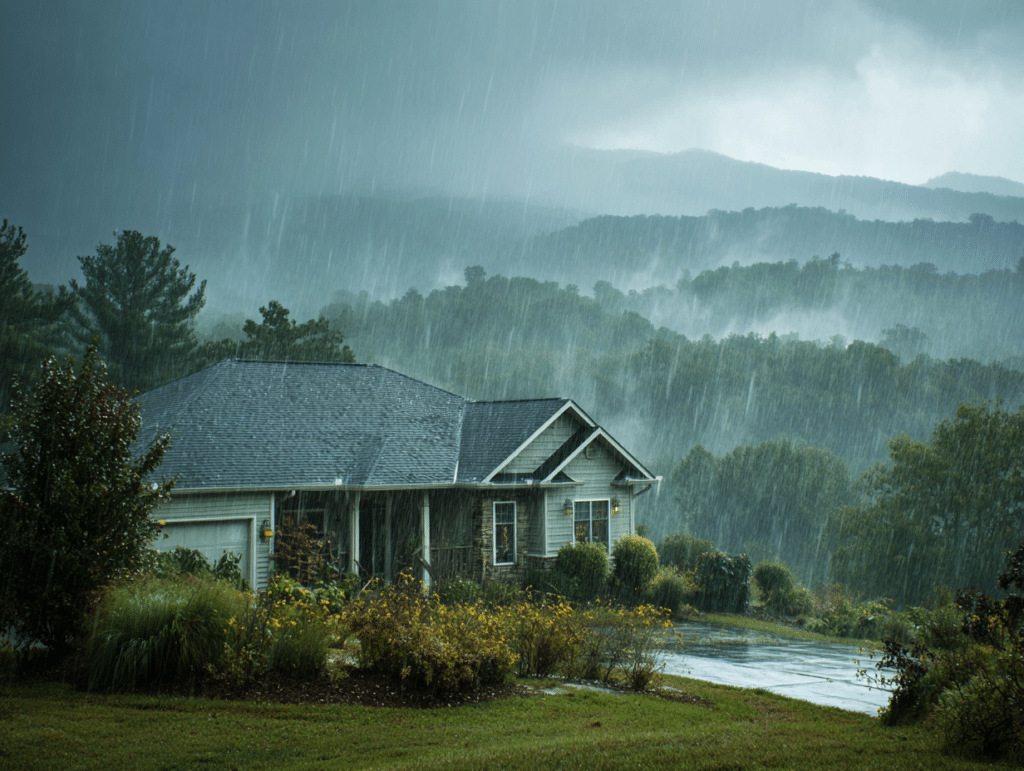
Western North Carolina is beautiful. It is also harder on roofing systems than most homeowners realize.
The region sits in a geographic position that creates a genuinely varied climate across relatively short distances. Asheville, at roughly 2,100 feet elevation, experiences different weather patterns than Brevard, Black Mountain, or Hendersonville. Properties at 4,000 feet in the higher surrounding areas see conditions closer to what you would find in New England than what most people picture when they think of the South.
Understanding what your roof actually faces throughout the year helps you maintain it properly, catch problems before they compound, and make informed decisions when it comes time for repair or replacement.
Spring: Wind Damage and Hail Season
Spring in WNC brings storm systems that can be severe. Fast-moving lines of thunderstorms carrying strong wind gusts and hail are common from late March through May. These events are responsible for a significant share of the emergency roof repair calls that come in during the year.
Wind damage typically shows up as lifted, cracked, or missing shingles. Even shingles that look intact from the ground can have their adhesive seals broken by high winds, leaving them vulnerable to future water infiltration. Flashing around chimneys and vents is also particularly vulnerable during wind events.
Hail is the more complicated problem. Small hail, say the size of a marble or smaller, often causes damage that is not visible from the ground but shows up clearly on close inspection: bruised shingles where the granule layer has been knocked away, leaving the fiberglass mat underneath exposed. This accelerates aging and UV degradation significantly. Larger hail creates visible cracking, punctures, and dented flashing.
After any significant spring storm, it is worth having your roof inspected by a licensed contractor. What looks like no damage from the driveway is often quite different up close.
Summer: Heat, UV Exposure, and Thermal Cycling
Summer in lower-elevation parts of the WNC service area brings sustained heat, high humidity, and direct UV exposure. Asphalt shingles expand in heat and contract as temperatures drop. Over years of this thermal cycling, the material becomes more brittle and the adhesive strips between shingles weaken.
UV radiation gradually breaks down the bitumen in asphalt shingles. This is why granule loss, which you would notice in your gutters or around your downspouts, is such an important signal. Those granules serve as the shingles’ UV protection. Once they start shedding in significant quantities, the material underneath is exposed and deteriorating more quickly.
Roof ventilation becomes especially critical in summer. Poor attic ventilation traps heat, which cooks asphalt shingles from below while the sun beats on them from above. A well-ventilated attic extends shingle lifespan considerably and reduces cooling costs inside the home. If you notice your upper floors are uncomfortably warm or your energy bills spike in summer, your attic ventilation may need attention.
Fall: Leaf and Debris Accumulation
Fall in the mountains is spectacular, and it also means a heavy load of leaves dropping onto and around your roof. This matters more than it might seem.
Leaves and debris that accumulate in roof valleys, around flashing, and in gutters create moisture traps. Standing moisture accelerates shingle deterioration, promotes algae and moss growth, and puts pressure on gutter systems. Clogged gutters cannot drain properly, which means water backs up along the roofline, potentially working under shingles and into the eave structure.
Fall is the right time to clean gutters thoroughly, clear debris from roof valleys and around any penetrations, and do a visual inspection of the roof’s overall condition before winter arrives. Going into winter with a debris-laden, poorly draining roof system is a setup for problems.
Winter: Ice Dams, Snow Load, and Freeze-Thaw Cycles
Winter is when WNC’s elevation variation matters most to homeowners. Even in Asheville, temperatures fluctuate enough to create freeze-thaw cycles that stress roofing materials. At higher elevations, more significant snow accumulation and more frequent ice formation create additional challenges.
Ice dams form when heat escaping through a poorly insulated roof melts snow near the ridge, and the meltwater refreezes when it reaches the colder eave area. The ice builds up and creates a dam that prevents drainage, eventually backing water under the shingles. Ice dam damage can be extensive and is almost always tied to attic insulation and ventilation deficiencies rather than shingle quality.
Snow load is generally manageable for most residential structures in the WNC area, but roofs with complex designs, flatter pitches, or any structural compromise should be monitored after significant snowfall.
Freeze-thaw cycling works water into any existing crack or damaged area and expands it. A minor flashing gap or a slightly cracked shingle that would be a simple repair in October becomes a significant leak by February.
Post-Hurricane Helene: What the 2024 Storm Season Taught Local Homeowners
Hurricane Helene’s impact on Western North Carolina in late 2024 served as a stark reminder that extreme weather events are a real part of life in this region. Beyond the more widely covered flooding, the storm-related wind damage affected roofing systems across a wide geographic area.
Many homeowners discovered damage they did not know they had, and others found that deferred maintenance created compound problems when a severe event arrived. Roofs that were already near the end of their effective lifespan suffered more significantly than those in good condition.
If your roof went through that storm season without a professional inspection, it is worth scheduling one. Not every storm leaves obvious signs from the ground, and catching problems early is always less expensive than addressing them after water has had time to work its way into the structure.
What You Can Do Between Inspections
You do not need to be a roofing expert to protect your investment. These are practical steps any homeowner can take:
Clean gutters at minimum twice a year, in late spring after pollen season and in late fall after the leaves are down
Keep tree branches trimmed back from the roof surface
After any significant storm, do a ground-level visual check for missing shingles, debris accumulation, and damaged flashing
Check your attic after heavy rain for any signs of moisture, water staining, or light penetration
Schedule a professional inspection every three to five years on a newer roof, or annually on a roof that is more than 15 years old
These habits do not require much time or money, and they prevent small issues from becoming expensive ones.
Frequently Asked Questions
How do I know if my roof has hail damage?
Hail damage to asphalt shingles often looks like random dark spots or bruised areas where granules have been knocked away, leaving the fiberglass mat visible. You may also see dented metal flashing, damaged ridge caps, or cracked shingles depending on hail size. Ground-level inspection is usually insufficient for a thorough assessment. A professional inspection is the reliable way to know for certain.
Is moss or algae on my roof a serious problem?
Moss and algae growth is more than cosmetic. Moss holds moisture against the shingle surface and can work under shingles over time, lifting them and allowing water infiltration. Algae causes the dark streaking you see on many roofs and accelerates granule loss. Both should be addressed when discovered. Certain shingle lines, including some in the GAF Timberline® family, include algae-resistant protection.
My gutters are pulling away from the house. Is that a roofing issue?
It can be. Gutters that are separating from the fascia are often doing so because the fascia board has rotted from long-term moisture exposure. This is typically related to gutters that have been clogged and overflowing, causing water to back up against the fascia repeatedly. The gutters need re-securing, and the fascia may need replacement. Our team handles both.
How much does seasonal roofing maintenance typically cost?
Professional inspections are often free or very low cost from reputable contractors. Gutter cleaning, minor repairs, and debris removal vary based on the scope of work. The consistent finding in roofing is that spending a small amount on maintenance regularly costs far less than addressing deferred problems later.
How soon after a storm should I get my roof inspected?
As soon as reasonably possible. Insurance claims have time limitations, and documenting damage quickly works in your favor. Our team is available 24/7 for emergency situations and can typically schedule inspections promptly after significant weather events.
Staying Ahead of WNC’s Weather
The good news about maintaining a roof in Western North Carolina is that most weather-related damage is either preventable with good maintenance or manageable when caught early. The homeowners who face the biggest bills are almost always the ones who deferred attention for too long.
Our team serves Asheville, Hendersonville, Fletcher, Black Mountain, Brevard, Waynesville, and communities throughout Western North Carolina and the South Carolina upstate. We are licensed, insured, and available around the clock when urgent situations come up.
Contact Secure Roofing to schedule a free inspection, or call us at 828-888-ROOF. You can also learn more about our roof repair services and what to watch for throughout the year.
Schedule OurService
Our Services
Contact Our Roofing Team
Ask Secure Roofing today for an appointment. Call us or fill out the form to get started.