
Metal Roof Coatings: The Ultimate Guide to Systems, Products & Applications
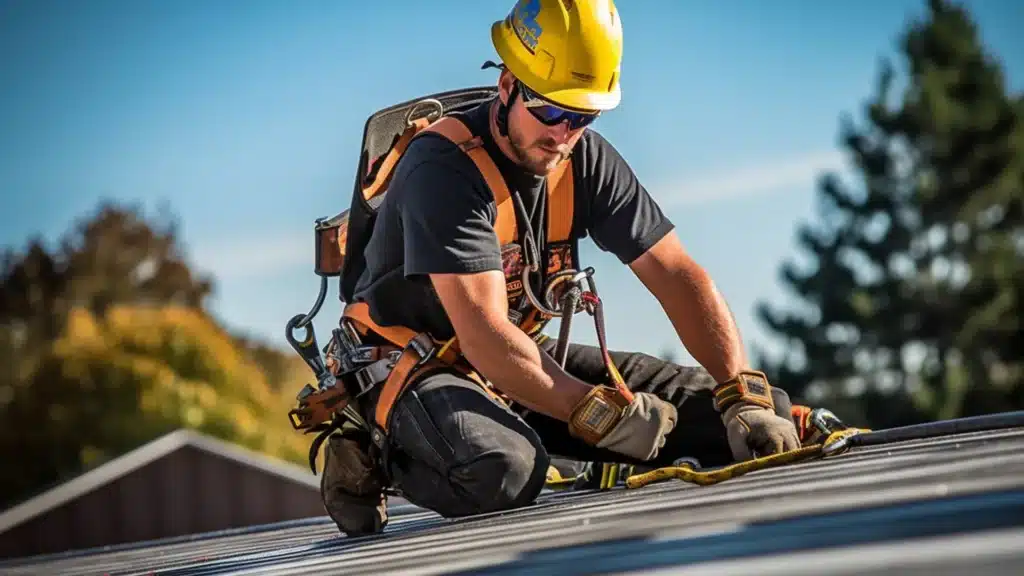
Metal roofs built to last 40-60 years still need protection from Western North Carolina’s challenging weather. That’s where metal roof coatings come in. These specialized systems create a protective barrier that shields your investment from UV radiation, moisture intrusion, thermal expansion, and the mountain climate’s temperature swings.
Modern metal roof coatings do more than prevent rust. They reflect solar heat to reduce cooling costs by 10-25%, seal minor leaks without expensive tear-offs, and restore weathered surfaces to like-new condition. The technology has come a long way from the basic roof paints of decades past.
Today’s coating systems use advanced polymers engineered for specific performance characteristics. Some excel at ponding water resistance. Others prioritize flexibility for thermal movement. The best choice depends on your roof type, building use, and climate exposure.
Metal roof coatings typically cost $1.50-$4.00 per square foot installed, delivering a strong return through extended roof life and lower energy bills. A $5,000 coating project on a 2,000-square-foot roof often saves $200-400 annually in cooling costs while adding 10-15 years of service life. Compare that to a $15,000- $ 25,000 roof replacement, and the value becomes clear.
This guide covers everything you need to know: coating types and their performance characteristics; selection criteria for different roof styles and conditions; application requirements and best practices; realistic cost expectations and ROI calculations; and maintenance guidelines to maximize coating lifespan. Whether you’re protecting a new metal roof or restoring an aging one, you’ll find the information needed to make an informed decision.
Understanding Metal Roof Coating Types
Acrylic Coatings
Acrylic roof coatings are water-based and have become the most popular choice for residential metal roofs. These systems offer excellent UV resistance, reasonable cost, and straightforward application, making them well-suited for do-it-yourselfers and professional contractors alike.
The chemistry behind acrylics provides inherent reflectivity without additional pigments. White acrylic coatings typically achieve Solar Reflectance Index (SRI) values of 100-110, meeting ENERGY STAR cool roof standards. This results in surface temperatures 40-60 degrees cooler than those of uncoated metal on summer afternoons.
Temperature limitations present the main drawback. Acrylics shouldn’t be applied below 50 degrees Fahrenheit, and some formulations require 60-degree minimums. This restricts application windows in Western North Carolina to late spring through early fall. The coatings also become brittle in extreme cold, which can be a concern at higher elevations where winter temperatures regularly drop below 20 degrees.
Acrylics work best on residential standing seam and corrugated roofs in moderate climates. They excel at UV protection but aren’t the top choice for roofs with ponding water issues or severe weathering. Plan on recoating every 10-12 years for optimal protection.
Silicone Coatings
Silicone roof coatings stand out for their exceptional weatherproofing and resistance to ponding water. Unlike acrylics that can fail when water sits on horizontal surfaces, silicones maintain their integrity even after weeks of standing moisture. This makes them ideal for low-slope metal roofs common on additions, porches, and commercial buildings.
The chemistry creates a hydrophobic surface that sheds water immediately. Rain beads up and rolls off rather than being absorbed. This characteristic also means dirt and debris wash away naturally, keeping the roof cleaner than other coating types. Western North Carolina’s frequent rain actually helps maintain appearance.
Temperature flexibility gives silicones an advantage in mountain applications. Most formulations can be applied at temperatures as low as 40 degrees, extending the application season. Once cured, they remain flexible at temperatures well below zero, without cracking due to thermal contraction.
Cost ranges from $2.00 to $3.50 per square foot, installed. Material costs $0.80-$1.50 per square foot, with coverage rates of 1.0-1.5 gallons per 100 square feet at the proper thickness. That $4,000-$7,000 investment for a 2,000-square-foot roof buys superior waterproofing and typically lasts 15-20 years before recoating.
Application characteristics require attention. Silicones don’t re-emulsify in water after curing, so cleanup must be done immediately with mineral spirits. The coating also attracts dust during the first few hours of cure, requiring windless conditions for best results. A professional application makes sense for most homeowners.
Polyurethane Coatings
Polyurethane systems deliver maximum durability through two-component chemistry. The base and catalyst mixture is applied just before use, triggering a chemical reaction that creates an incredibly tough, abrasion-resistant membrane. This makes polyurethanes the go-to choice for roofs with foot traffic or equipment installations.
The two-component system creates application complexity. Once mixed, the material has a pot life of 30-90 minutes, depending on temperature. This means mixing only what you can spray in that window. Waste from leftover mixed material adds to project costs. Professional equipment and experience matter here.
Cost runs $2.50-$4.00 per square foot installed for aliphatic single-coat systems. Aromatic base coat plus topcoat systems may cost slightly less in materials but require more labor. Figure $5,000-$8,000 for a 2,000-square-foot residential roof, with the premium buying 20+ years of protection and exceptional impact resistance.
Polyurethanes excel in commercial and industrial buildings, roofs with HVAC equipment, and any application where durability justifies the cost premium. They’re overkill for basic residential protection but make sense when you need maximum toughness.
Elastomeric Coatings
Elastomeric coatings prioritize flexibility, accommodating the daily thermal expansion and contraction of metal roofs. These systems can stretch 200-400% before failure, compared to 100-150% for standard acrylics. This prevents the cracking and splitting that plagues rigid coatings as metal panels expand in summer heat and contract in winter cold.
The flexibility comes from specialized polymers and plasticizers. Most elastomers use acrylic or urethane chemistry modified for enhanced elongation. This maintains breathability while creating a truly waterproof membrane that moves with the substrate. Think of it as a rubber skin that expands and contracts without tearing.
Climate suitability varies by formulation. Water-based elastomers handle humid conditions well and clean up easily, but they have temperature limitations similar to standard acrylics. Solvent-based versions are suitable for lower temperatures and cure faster, but they smell stronger and require cleanup with mineral spirits. Choose based on your application season and tolerance for odor.
Cost typically ranges from $2.00 to $3.00 per square foot installed, positioning elastomerics between basic acrylics and premium silicones. Material costs of $0.60-$1.00 per square foot reflect the specialized chemistry. A 2,000-square-foot roof costs $4,000-$6,000 and is expected to last 12-15 years before recoating.
Elastomerics work well on standing-seam roofs where thermal movement is significant, on older roofs showing minor deterioration, and in areas with extreme temperature swings. Western North Carolina’s 60-80 degree daily temperature variations during spring and fall make flexibility valuable.
Specialty Coatings
Several specialized coating systems serve niche applications where standard products fall short.
Fluoropolymer coatings represent the premium tier. These use Kynar or similar resins for exceptional UV resistance and color retention. While incredibly durable, the cost of $5.00-$8.00 per square foot limits use to high-visibility commercial buildings. Residential applications rarely justify the expense.
Asphalt-based products still exist but have fallen out of favor. These thick, tar-like coatings seal well but turn brittle over time and offer no reflectivity. Modern alternatives perform better in nearly every metric. The only advantage is cost: running $1.00-$1.50 per square foot, but a short 5-7-year lifespan makes them a false economy.
Specialized applications might include cold-applied systems for winter repairs, rapid-cure formulations for emergency situations, or tintable products to match architectural colors. Discuss your specific needs with your coating supplier to determine whether a specialty product is appropriate.
Coating Performance Characteristics
Reflectivity and Emissivity
Solar reflectance measures how much sunlight a roof reflects rather than absorbs as heat. White coatings typically reflect 75-90% of solar radiation, compared to 20-40% for uncoated metal. That difference translates directly to lower attic temperatures and reduced cooling loads.
Thermal emissivity describes how effectively a surface releases absorbed heat. High emissivity (0.80-0.90) means the roof radiates heat back to the sky rather than conducting it into the building. Combined with high reflectance, this creates the “cool roof” effect that can lower surface temperatures by 40-60 degrees on summer afternoons.
The Solar Reflectance Index combines both factors into a single number. SRI values range from 0 (black surface at 158°F) to 100 (white surface at 100°F). ENERGY STAR requires an SRI of 78 or higher for low-slope roofs and 29 or higher for steep-slope residential roofs. Quality white coatings easily exceed these minimums, achieving SRI values of 100-110.
The energy savings potential is 10-25% of cooling costs in Western North Carolina. A home spending $1,200 annually on air conditioning might save $150-300 per year. Actual savings depend on attic insulation, HVAC efficiency, building orientation, and window quality. Homes with poor insulation see smaller benefits because heat gain through the roof accounts for less of their total cooling load.
Cool roof standards also affect fire insurance in some areas and may qualify for property tax reductions or utility rebates. Check with your insurance provider and local building department about potential incentives. Some utility companies offer $0.10 to $0.20 per square foot in rebates for cool roof installations.
Waterproofing Capabilities

Hydrostatic pressure resistance determines whether a coating can stop active leaks. Quality roof coatings handle 10-30 pounds per square inch, enough to seal pinholes and small seam gaps. This won’t prevent major leaks from missing fasteners or large panel separations, but it effectively seals minor moisture intrusion that causes gradual deterioration.
Seamless membrane formation creates the waterproofing advantage. Liquid-applied coatings flow into every valley, around every fastener, and across every seam. After curing, you have a monolithic layer with no weak points where water can penetrate. This beats mechanical systems like metal panels or membranes that rely on overlaps and fastener patterns.
Expect quality coatings to stop minor leaks immediately and prevent new leaks for 10-20 years, depending on product type and maintenance. They’re not magic, though. Severely damaged roofs may need structural repairs before coating, and ponding water requires drainage solutions rather than relying on coating alone.
Physical Properties
Elongation percentages tell you how much a coating can stretch before breaking. Expressed as a percentage of original length, values range from 100% (doubles in length) to 400% (stretches to five times original length). Higher elongation accommodates thermal movement, impact, and substrate expansion without coating failure.
Metal roofs expand and contract significantly. A 50-foot steel panel might grow 3/8 inch on a hot summer day and shrink the same amount on a cold winter night. Standing seam systems accommodate this through clip movement, but the coating must stretch with the metal. A minimum of 200% elongation handles most residential applications, with 300-400% providing extra margin.
Tensile strength measures the force required to pull the coating apart, expressed in pounds per square inch (psi). Values range from 200 psi for basic acrylics to 1,000+ psi for polyurethanes. Higher tensile strength resists tearing and wear from foot traffic, wind-blown debris, and minor impacts. It also indicates overall coating toughness.
Mil thickness requirements specify the required thickness of the coating. Most manufacturers recommend 15-25 mils dry film thickness (DFT) for single coats, or 10-15 mils per coat in two-coat systems. Measure DFT with a magnetic or electronic gauge after curing. Being too thin gives poor coverage, being too thick risks cracking, and longer cure times.
Chemical Resistance
Acid rain protection became important as air quality declined over recent decades. While Western North Carolina’s air quality is better than that of urban areas, rainfall still has a pH of 4.5-5.5, compared to neutral 7.0. Quality roof coatings resist this mild acidity without degradation, preventing the etching and chalking that plagued older products.
UV degradation prevention remains the primary challenge for roof coatings. Ultraviolet radiation breaks down polymer chains, causing chalking, color fading, and eventual coating failure. Modern coatings include UV stabilizers—typically titanium dioxide pigments and specialized additives—that absorb or reflect UV before it damages the polymer matrix.
Chemical resistance also extends to biological growth. Mildew-resistant coatings include biocides that prevent the black streaking common on roofs in humid climates. This matters in Western North Carolina, where morning dew and afternoon humidity create ideal conditions for the growth of algae and mildew.
Metal Roof Coating Selection Guide
Roof Type Considerations
Standing-seam roofs require coatings that accommodate thermal movement at panel clips. The vertical seams move 1/8 to 1/4 inch as panels expand and contract. Choose coatings with 250%+ elongation to prevent the cracking and delamination that occurs when rigid products can’t flex with the substrate. Silicone and elastomeric coatings excel here.
Exposed fastener patterns on corrugated roofs benefit from coatings with good penetration around fastener heads. The coating should seal the gap between the fastener washer and panel, creating a waterproof seal. This prevents the “rusting from fasteners” problem common on older corrugated roofs.
Metal shingle applications require flexible coatings that won’t crack at the edges of individual shingles. Each shingle moves independently, creating stress points where rigid coatings fail. Elastomeric products work best because their high elongation prevents edge cracking. The textured surface of metal shingles also demands spray application for proper coverage.
Climate-Based Selection
Humid climates, such as those in Western North Carolina’s mountains, require coatings with good moisture tolerance. Look for products that can be applied at higher humidity levels (up to 85% relative humidity) and that resist blistering when moisture moves through the substrate. Silicone and quality acrylic coatings handle humidity well.
Morning dew creates application challenges in mountain areas. A coating applied over dew-dampened metal won’t adhere properly. Plan application for late morning through early evening when surfaces are fully dry. This limits working hours but prevents adhesion failures that show up within a year.
Mountain and high elevation factors include increased UV exposure and wind-driven rain. UV radiation increases 6-8% per 1,000 feet of elevation, making UV stability critical for properties above 3,000 feet. Wind-driven rain tests coating adhesion, favoring products with excellent wet adhesion properties.
Building Use Factors
Residential best practices focus on cost-effectiveness and ease of maintenance. Acrylic or elastomeric coatings provide good value, with 10-15 year service lives that align with typical homeowner planning horizons. White or light colors maximize energy savings and qualify for cool roof benefits.
Roof access matters for residential properties. Homes with minimal roof traffic can use standard formulations, while those with regular maintenance access to HVAC equipment or solar panels need tougher coatings. Consider polyurethane systems for high-traffic areas, even if the rest of the roof gets acrylic.
Agricultural building specifications prioritize cost over aesthetics. Farm buildings need reliable waterproofing but don’t require premium appearance or maximum reflectivity. Standard acrylic coatings deliver solid performance at budget-friendly prices. The lower cost also makes recoating every 8-10 years financially feasible.
Condition-Based Selection
New metal roof coatings extend the factory finish’s life and increase reflectivity. Apply coating within 6-12 months of roof installation for best results, before any surface oxidation occurs. Light surface cleaning prepares new metal for coating. Choose any coating type based on climate and performance needs rather than condition factors.
Rust-inhibitive requirements apply to roofs with active rust but structurally sound panels. Zinc-rich primers convert surface rust and prevent further oxidation. Apply primer at 3-5 mils DFT, allow to cure for 24-48 hours, then topcoat with standard acrylic or silicone coating. This system adds $0.50 to $1.00 per square foot while saving roofs that would otherwise need replacement.
Severely degraded surfaces may be beyond the scope of coating. Panels with rust-through holes, missing sections, or structural damage need repair or replacement before coating makes sense. Roof replacement costs 3-5 times more than coating but delivers 40-60 years of service versus 10-15 years from coating. Evaluate the total cost of ownership over 20 years to make the right decision.
Application Methods and Best Practices
Surface Preparation
Cleaning techniques vary by roof condition. New or lightly weathered roofs need only pressure washing with water to remove dust, pollen, and loose debris. Use a pressure of 1,500-2,000 psi to avoid panel damage. Let the roof dry completely—typically 24-48 hours depending on weather—before coating.
Weathered roofs with chalk, oxidation, or biological growth require detergent washing. Mix mild detergent or a dedicated metal roof cleaner per the manufacturer’s directions. Apply with a pump sprayer or soft brush, scrub lightly, and rinse thoroughly. Residual detergent will prevent coating adhesion, so rinse multiple times until the water sheets off cleanly.
Repair procedures should happen before coating. Replace missing fasteners, seal large seam gaps with butyl tape, and patch holes with metal repair patches. Coating isn’t a substitute for proper repairs—it enhances and protects sound substrates but won’t fix structural problems. Budget $200-500 for typical repair items found during preparation.
Application Equipment

Airless sprayers deliver the fastest, most uniform coating application for projects over 500 square feet. Use a sprayer rated for roof coatings—minimum 3,000 psi with 0.021-0.027 inch tip. Smaller tips clog with coating solids, and larger tips waste material through overspray. Electric models work well for residential projects, and gas-powered models work well for commercial projects.
Brush techniques serve detailed work around penetrations, edges, and accessories. Use 3-4-inch brushes with synthetic bristles (natural bristles do not work well with water-based coatings). Brush application ensures the coating penetrates corners and gaps that spray and roller applications might miss. Budget 5-10% of the total coating for brush-applied details.
Equipment specifications for sprayers include a minimum 3-gallon hopper capacity (5 gallons is better for large projects), a 100-foot hose (for spraying from the ground on single-story buildings), and pressure control (to maintain consistent atomization). Expect to pay $400-800 for a quality consumer-grade airless sprayer, or rent professional-grade units for $75-125 per day.
Application Conditions
Temperature requirements vary by coating type. Most acrylics require a minimum air and surface temperature of 50-60°F at application and for 24 hours after. Silicones apply at 40°F+. Polyurethanes typically require 60°F+ due to sensitivity to cure chemistry. Maximum temperatures rarely limit work—most coatings can be applied at air temperatures up to 100°F.
Dew point calculations determine whether moisture will condense on the roof during curing. Dew point must be at least 5 degrees below surface temperature during application and for 6-24 hours afterward, depending on coating type. Use a sling psychrometer or an electronic dew point meter to check conditions. Morning dew or evening condensation will ruin an otherwise good coating job.
Rain forecasts require checking both during application and the following 6-24 hours. Rain during application ruins the coating job, requiring stripping and reapplication. Rain during initial cure can cause washout, spotting, or loss of mil thickness. Check weather forecasts carefully and plan coating work only when dry weather is expected for at least 24 hours.
Coverage and Thickness
Wet mil measurements determine how thick you’re applying the coating before the solvent or water evaporates. Use a wet film thickness gauge—simple, notched tools that cost $15-30. Check wet mils every 100-200 square feet and adjust application technique to maintain proper thickness. Most coatings go on at 15-25 wet mils for single coats.
Recoat windows matter for two-coat applications. Apply the second coat after the first coat has dried but before it fully cures—typically 2-24 hours, depending on the coating type and weather. This allows chemical bonding between coats rather than relying solely on mechanical adhesion. Exceeding the recoat window requires light sanding before the second coat.
Quality control methods include wet mil measurement during application, DFT measurement after curing, pull-off adhesion testing in critical areas, and visual inspection for voids, thin spots, and uniform coverage. Professional contractors document measurements with photos. Do-it-yourselfers should, at a minimum, measure DFT in multiple roof areas to verify adequate thickness.
Leading Metal Roof Coating Products
Premium coating systems offer the highest performance and warranty coverage. These products typically cost $1.00-$2.00 per square foot for materials alone but deliver a 15-20-year service life and comprehensive warranty coverage.
Mid-range products balance cost and performance for residential applications where premium warranties aren’t critical. These formulations deliver a 10-12-year service life at significantly lower cost.
Rust-Oleum Roof Accessory Paint offers a decent acrylic coating at a budget-friendly price. The formulation provides adequate UV resistance and waterproofing for moderate climates. Expect 8-10 year recoat intervals. The cost of $45-55 per 5-gallon bucket makes this appealing for agricultural buildings or rental properties. Coverage runs 350-400 square feet.
Rust-converting coatings, such as Rust-Oleum Rust Reformer, provide emergency treatment for rusted roofs. The phosphoric acid formula converts rust to a stable black coating that can be topcoated after 24-48 hours. Not a permanent solution, but it buys time for roofs with moderate rust that aren’t quite ready for replacement. Cost: $35-45 per gallon covering 100-150 square feet.
Maximum-reflectivity systems use ceramic additives and premium pigments to achieve SRI values of 115-120. The additional 5-10 SRI points versus standard white coatings might save another $20-30 annually in cooling costs. Decide whether that’s worth the $20-30 per-bucket premium. Benefits increase for buildings with poor insulation or high cooling loads.
Metal Roof Coating Costs
Material Cost Factors
Product quality tiers create a wide range of costs. Budget acrylics run $0.40-$0.60 per square foot; mid-grade products cost $0.60-$0.80; and premium silicones or polyurethanes cost $0.80-$1.50 per square foot. These material costs assume proper mil thickness—spreading coating too thin to hit lower prices voids warranties and reduces service life.
Coverage rates depend on surface texture and application method. Smooth standing-seam panels require 1.0-1.5 gallons per 100 square feet at the proper thickness. Corrugated panels use 1.5-2.0 gallons per 100 square feet due to increased surface area. Spray application wastes 10-20% of the material due to overspray. Budget accordingly.
Primer requirements vary by substrate condition. New or sound factory-finished metal often skips primer when properly cleaned. Bare metal requires primer, adding $0.15-$0.25 per square foot. Rusted metal needs rust converte,r then primer, adding $0.30-$0.40 per square foot. Calculate these additions separately from coating costs.
Labor Considerations
Application complexity affects labor rates. Simple gable roofs with few penetrations run $0.75-$1.25 per square foot for professional application. Complex roofs with dormers, valleys, and multiple roof planes cost $1.25 to $2.00 per square foot. Steep slopes with a pitch above 8:12 add $0.25-$0.50 per square foot for safety equipment and a slower work pace.
Preparation requirements determine total project hours. Light cleaning adds 1-2 hours per 1,000 square feet. Heavy cleaning with rust treatment adds 4-6 hours per 1,000 square feet. Extensive repairs can add 8+ hours before coating work begins. Labor rates range from $45 to $ 75 per hour for experienced coating contractors.
Project size economies reduce per-square-foot costs on larger projects. A 1,000-square-foot roof might cost $2.50-$3.50 per square foot installed, while a 5,000-square-foot commercial roof costs $1.75-$2.50 per square foot. Fixed costs like equipment setup, travel time, and minimum crew size spread across more square footage on bigger jobs.
ROI Analysis
Energy savings projections use reductions in surface temperature to estimate the impact on cooling costs. A 50-degree reduction in surface temperature (typical for a white coating over dark metal) might lower cooling costs by 10-25%, depending on building insulation and HVAC efficiency. For a home spending $1,200 annually on cooling, that’s $120-300 in annual savings.
Calculate your potential savings: multiply your annual cooling costs by 0.10-0.25, then verify the results against your attic insulation quality. Poor insulation reduces the impact of coatings because heat gain through walls and windows dominates. Good insulation maximizes the benefits of the coating because roof heat gain accounts for a larger percentage of the cooling load.
Total ROI calculation for a typical 2,000-square-foot residential roof: coating cost $5,000; energy savings $200/year for 12 years = $2,400; maintenance savings $300/year for 12 years = $3,600; delayed replacement value $15,000. Total benefit: $21,000 for a $5,000 investment. That’s a 320% return, or roughly 12% annually. Hard to beat with other home improvements.
Maintenance and Recoating
Inspection Schedule
The annual assessment protocol should happen each fall before winter weather arrives. Walk the roof (if safe) or use binoculars from ground level to check for coating issues. Look for chalking (white powdery residue when you rub the surface), cracking or peeling, discoloration, biological growth, and ponding water areas that might indicate drainage problems.
Specific inspection points include seams where the coating may have pulled away from vertical surfaces, fastener areas where rust may be forming beneath the coating, valleys where debris accumulates and retains moisture, penetrations where flashing integrity is critical, and edges where wind can lift the coating. These areas show problems first.
Cleaning requirements typically mean annual pressure washing to remove dirt, pollen, and biological growth. Use a pressure of 1,200-1,500 psi with a wide fan tip, working from the roof peak downward. This prevents mildew from establishing and keeps the coating bright white for maximum reflectivity. Light cleaning extends coating life by 20-30%.
Touch-up procedures address small areas of damage before they spread. Keep a gallon of coating on hand for this purpose. Clean the area, lightly sand if needed, and brush on a coat extending several inches beyond the damage. Feather edges to blend with the surrounding coating. Annual touch-up of 1-2% of the roof area is normal.
Recoating Guidelines

Expected coating lifespan varies by product type and climate exposure. Acrylic coatings typically require recoating every 10-12 years, elastomers every 12-15 years, and silicones every 15-20 years. These intervals assume proper application and reasonable maintenance. Deferred maintenance or application errors might cut the lifespan in half.
Product compatibility issues arise when recoating with different products. Acrylic over acrylic works fine. Silicone over acrylic works fine. Acrylic over silicone can fail since nothing sticks well to silicone. If you must change product types, test adhesion in several areas, or consult coating manufacturers about compatible systems.
The easiest approach is to use the same product for recoating that you used originally. Order from the same manufacturer if possible, or at a minimum, match coating chemistry (acrylic to acrylic, silicone to silicone). This eliminates compatibility questions.
Case Studies and Results
Residential Success Story
A 2,400-square-foot standing seam metal roof in Black Mountain, NC, showed moderate rust and faded paint at 18 years old. The homeowner faced a decision: coat the roof for $6,000 or replace it for $22,000. They chose acrylic elastomeric coating with a zinc-rich primer on rusted areas.
Surface preparation took two days: pressure washing, rust treatment with converter, spot priming, and fastener inspection. The application took one day with a two-person crew using an airless sprayer. Total project cost: $5,800, including all materials and labor.
The homeowner reports being “extremely satisfied” and plans to recoat the roof in year 12 rather than replace it. Expected total roof lifespan: 42-45 years (18 years original, 12 years from first coating, 12 years from second coating) for a total investment of $11,600 in coating versus $22,000 for a new roof.
Commercial Application
A 12,000-square-foot commercial warehouse in Hendersonville, NC, with a corrugated metal roof, experienced multiple leaks and high cooling costs. The 20-year-old roof had rust at fasteners and exposed seams. Replacement quotes ranged from $85,000 to $110,000. Coating estimates came in at $18,000 to $24,000.
The project took five days with a three-person crew: two days of prep and three days of coating application. Final cost: $22,500 including $8,500 in materials and $14,000 in labor. Higher per-square-foot cost ($1.88) reflected extensive preparation requirements and commercial crew rates.
The owner calculates the breakeven point at 3.8 years based solely on energy savings ($4,100/year divided by the $22,500 cost). Including avoided replacement cost ($90,000 average quote minus $22,500 coating = $67,500 saved), the ROI becomes even more attractive. Expected coating life before recoating: 15-18 years based on silicone’s performance characteristics.
Key lessons learned: addressing drainage issues before coating prevents ponding; commercial projects need detailed preparation specifications in writing before work begins; and energy savings in commercial buildings with high cooling loads can justify premium coating systems.
Get Your Free Metal Roof Coating Consultation

Understanding metal roof coatings is just the first step. The next step is to assess your roof’s specific condition, climate exposure, and performance needs to select the optimal coating system. That’s where Secure Roofing’s experience matters.
Our consultation process starts with a thorough roof inspection. We check the condition of existing coating or paint, look for rust or deterioration, evaluate drainage and ponding, measure roof pitch and surface area, and identify any repairs needed before coating. This takes 30-45 minutes for typical residential roofs.
What to expect during the assessment: photos documenting roof condition, written notes on problem areas, product recommendations with rationale, detailed cost breakdown, and honest assessment of whether coating makes sense or if roof replacement would be more cost-effective for severely deteriorated roofs.
Contact Secure Roofing today for your free consultation. Call 828-888-ROOF or fill out our online form. Most consultations are scheduled within 3-5 days and completed within a week. Take the first step toward protecting your metal roof investment with a coating system designed for Western North Carolina conditions.