
Flat Roof & Low-Slope Roofing Services in Asheville, NC
Flat roofs and low-slope systems quietly handle a lot of punishment. No dramatic ridgeline, no visible shingles shedding granules, just a mostly hidden membrane sitting between your building and the sky. When that membrane holds, nobody thinks about it. When it fails, you notice fast.
As a flat-roof contractor in Asheville, NC, with years of experience in Western North Carolina’s demanding climate, Secure Roofing Services handles the full range of flat- and low-slope roofing work: installation, repair, replacement, drainage design, and ongoing maintenance. Whether you manage a commercial property in downtown Asheville or own a home with a contemporary flat roof design, this guide will help you understand your options, recognize problems early, and know what to expect from a qualified contractor.
What Makes a Roof “Flat” or “Low-Slope”?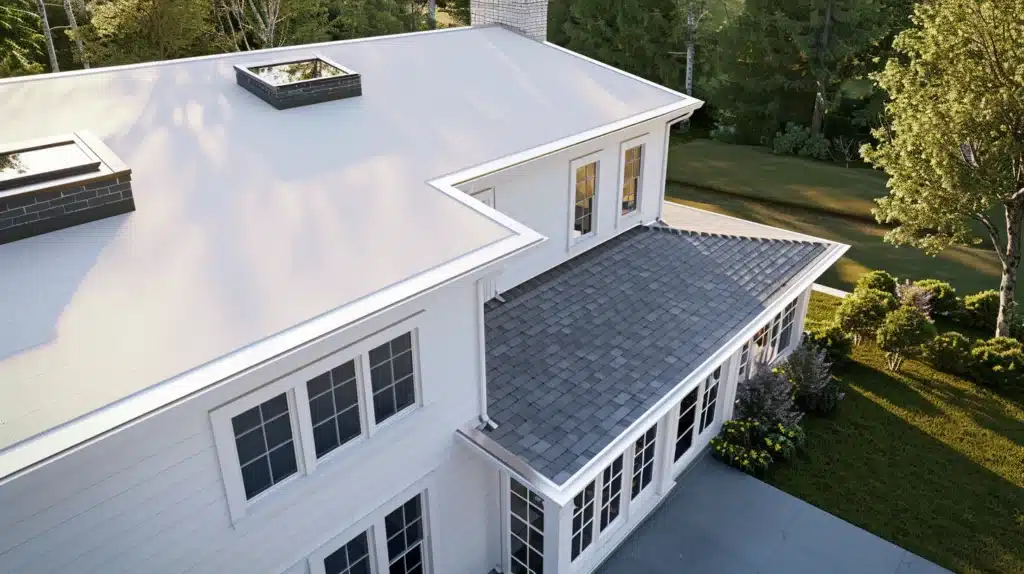
In roofing, “flat” is a bit of a misnomer. A truly horizontal roof would pool water with nowhere to drain, leading to failures quickly. What contractors and building codes actually refer to as flat roofs have a slight pitch — typically less than 2:12, meaning the roof rises less than 2 inches for every 12 inches of horizontal run.
This low-pitch category breaks down into two ranges:
- Flat roofs: Less than 1:12 pitch (under 1 inch of rise per 12 inches of run). Common in commercial buildings, warehouses, and modern residential designs.
- Low-slope roofs: Between 1:12 and 2:12 pitch. Found on commercial structures, additions, porch overhangs, and some residential styles.
Both require membrane systems specifically designed for low-slope drainage. Standard asphalt shingles won’t work here water moves too slowly across the surface and will work its way under the laps before it reaches a gutter. A flat roof contractor in Asheville, NC needs to match the right membrane system to the building type, drainage capacity, and expected weather exposure.
Flat Roof Systems: What’s Available and How They Compare
There’s no single “best” flat roof material. The right choice depends on your building, your budget, and how the roof will be used. Here’s how the main systems break down.
TPO (Thermoplastic Polyolefin)
TPO has become one of the most widely used flat roofing membranes for commercial buildings over the past two decades. It’s a single-ply membrane, one continuous layer of thermoplastic material heat-welded at the seams to create a watertight bond.
TPO handles UV exposure well and reflects solar heat, which helps with energy costs during summer. It’s also relatively lightweight and comes in standard white, gray, and tan. For commercial flat roof contractor work in Asheville, NC, TPO is often the first system we discuss because it delivers solid performance at a competitive price point across a wide range of building types.
The tradeoff: TPO quality varies by manufacturer and installation. Poor seam welding is the most common failure point. When TPO is installed correctly by an experienced flat roof contractor, it typically performs well for 15 to 25 years, depending on thickness and conditions.
EPDM (Ethylene Propylene Diene Monomer)
EPDM is rubber — specifically, a synthetic rubber membrane that has been installed on commercial and residential flat roofs since the 1960s. It’s proven, flexible, and holds up well against freeze-thaw cycling, which matters in Asheville’s mountain climate.
EPDM comes in large sheets (up to 50 feet wide), which reduces the number of seams, and the seams are bonded with adhesive or tape rather than heat-welded. The material itself is highly durable and handles ponding water better than most alternatives over short durations.
Modified Bitumen
Modified bitumen is the evolution of the traditional built-up roof. It combines asphalt with modifying polymers, either APP (atactic polypropylene) or SBS (styrene-butadiene-styrene), to create a more flexible, durable membrane than straight asphalt.
This system handles foot traffic better than single-ply membranes, making it a reasonable choice for roofs that will see regular maintenance access. It also performs well in WNC’s temperature swings. Our metal roofing Services and modified bitumen teams often work the same commercial projects together.
Built-Up Roofing (BUR) / Tar and Gravel
Built-up roofing Services is one of the oldest commercial flat roof systems still in use. Multiple layers of roofing felt are alternated with hot-applied asphalt or coal tar pitch, then topped with a gravel or mineral surface layer.
BUR is heavy and requires a structurally sound roof deck to support it, but it’s extremely durable when properly installed. The gravel surface provides good UV protection and some fire resistance. As a flat roof contractor in Asheville, NC, we still install and repair BUR systems on commercial buildings, particularly where the structure already supports the weight and the owner wants a time-tested approach.
Repair work on older BUR systems is common, and it’s worth noting that these roofs often have multiple layers from previous re-roofing Services. At some point, a full tear-off becomes necessary.
Spray Polyurethane Foam (SPF) and Spray-Applied Coatings
Spray-applied roofing systems are worth attention, especially for restoration work. Secure Roofing Services offers a spray-on sealant coating with a lifetime warranty, a meaningful option for structurally sound flat roofs showing surface wear.
Spray polyurethane foam creates a seamless, monolithic surface across the entire roof. Because there are no seams, there are no seam failures. SPF also adds insulation value as part of the application. It’s applied in a single pass by a certified contractor and coated with a protective elastomeric topcoat.
Silicone and acrylic coatings applied over existing membranes can significantly extend roof life without a full replacement. These work well on TPO, EPDM, and modified bitumen roofs that are still structurally intact but losing their surface protection. Learn more about our coating approach through our Roof Maxx service page.
Flat Roof Installation: What the Process Looks Like
When Secure Roofing Services installs a flat roof in Asheville, NC, or the surrounding area, we start where every project should: with a thorough assessment of the existing structure and a free consultation to understand your needs.
The installation process generally follows these steps:
- Deck inspection and preparation. The roof deck must be structurally sound and free of rot, soft spots, or moisture damage before any membrane goes down. Problems here don’t get better after they’re covered.
- Insulation layer. Most commercial flat roofs include rigid foam insulation installed above the deck. This improves energy efficiency and provides a smooth surface for the membrane. The type and thickness of insulation affect both the R-value and the overall performance of the roof system.
- Membrane installation. Depending on the system selected, the membrane is either rolled out and adhered, heat-welded, torch-applied, or sprayed. Seams, edges, penetrations (pipes, HVAC curbs, drains), and flashings require careful attention; these are the areas where leaks start if installation is rushed or sloppy.
- Drainage integration. Interior drains, scuppers, or gutters are integrated into the system at this stage. Getting drainage right during installation is far easier and cheaper than correcting it later. Properly functioning gutters matter here, too. See our gutter installation services for edge-drainage solutions.
- Final inspection. A qualified flat roof contractor in Asheville, NC, will walk the completed roof, check all seams and termination points, and confirm proper drainage before signing off.
Flat Roof Repair: Catching Problems Before They Get Expensive
Most flat roof failures announce themselves with a leak — often well after the point of failure has occurred. Water can travel a significant distance from where it enters the membrane to where it appears on the ceiling below.
Common flat roof repair situations include:
- Seam failures: Heat-welded or adhered seams that have separated, lifted, or developed voids. The most common repair category on single-ply systems.
- Membrane punctures: HVAC technicians, foot traffic, and falling branches are frequent culprits. Often small and easy to patch if caught early.
- Flashing failures: Where the membrane meets walls, curbs, skylights, and penetrations. Flashing deteriorates separately from the field membrane and is a common leak point.
- Ponding water damage: Standing water accelerates membrane degradation. If water sits for more than 48 hours after rain, you have a drainage problem that needs to be addressed.
- Blistering and bubbling: Caused by moisture or gas trapped beneath the membrane. Blisters need to be opened, dried out, and re-patched before they spread.
As a flat-roof contractor in Asheville, NC, we recommend having any suspected leak inspected promptly. Water damage compounds — a minor membrane repair left unaddressed can become a deck replacement. Our roof repair services cover both flat and pitched systems across WNC.
Flat Roof Replacement: When Repair Isn’t Enough
There comes a point in every flat roof’s life when repair no longer makes financial sense. Signs that replacement is the better option:
- Multiple active leaks in different areas of the roof
- Widespread membrane shrinkage, cracking, or alligatoring
- Saturated insulation beneath the membrane
- The roof has reached or exceeded its expected service life
- Previous layers of re-roofing Services prevent additional overlay
When Secure Roofing Services recommends replacement to property owners in Asheville, NC, and Western North Carolina, we present the case clearly: here’s what we found, why repair won’t solve it in the long term, and your system options. No pressure, no rush — just an honest assessment so you can make an informed decision. Our roof replacement services apply to flat and low-slope systems as well as pitched roofs.
Replacement projects typically involve a full tear-off of existing layers, deck inspection and repair where needed, then a fresh installation of the chosen system. This is also the right time to address any drainage or structural issues that may have contributed to the original failure.
Drainage Design and Ponding Water Prevention
Water is the primary enemy of any flat roof. Proper drainage design solves most standing-water problems before they start, but drainage is often an afterthought during construction, especially for additions and low-budget commercial builds.
Western North Carolina sees heavy rainfall across all seasons. Asheville averages over 45 inches of rain annually, with additional snowmelt loading in late winter and spring. A flat roof drainage system needs to handle these volumes efficiently.
Drain types used in flat roofing Services:
- Interior drains: Floor-style drains set into the roof deck, connected to interior downspouts. Most common on commercial roofs. Require regular clearing of the drain screens.
- Scuppers: Openings cut through the parapet wall at the roof level, often backed by gutters or downspouts. Common on commercial flat roofs with parapet walls.
- Gutters and edge drains: Used on residential flat roofs and low-slope applications where water drains off the edge. Our gutter installation team sizes and installs edge drainage as part of flat roof projects.
Ponding water that remains standing more than 48 hours after rainfall indicates drains that are too small, clogged, or improperly located; insufficient roof slope; or structural deflection causing low spots. Sometimes adding a drain, resloping a section with tapered insulation, or clearing a blocked interior drain can solve a chronic problem without any membrane work at all.
WNC-Specific Challenges for Flat Roofs
Flat roofing Services in the mountains differ from those in Charlotte or Raleigh. Western North Carolina’s climate creates specific conditions that any qualified flat-roof contractor in Asheville, NC, needs to account for.
Heavy Rainfall and Sustained Moisture
Asheville sits in a geographic bowl that captures significant moisture from multiple directions. Storm events can drop 2 to 4 inches of rain in a few hours, and the region receives rainfall year-round, with no clear dry season. Flat roof systems here need to be sized and maintained for high-volume water events, not just average conditions.
Freeze-Thaw Cycling
At elevations above 2,000 feet, which covers much of Asheville and the surrounding communities, temperatures frequently cycle above and below freezing during late fall, winter, and early spring. Water that infiltrates a seam or a membrane crack expands as it freezes, widening the gap with each freeze-thaw cycle. This is why EPDM’s flexibility in cold temperatures is an asset in this region, and why modified bitumen’s SBS formulation performs well here too.
Wind Events and Storm Damage
Asheville and the broader WNC area experience strong wind events, including remnants of Gulf storms that push up through mountain gaps. Flat roof edges, flashings, and membrane terminations are vulnerable to wind uplift if not properly secured. After major storm events, prompt inspection of flat roofs is critical. Even if the membrane looks intact from ground level, edge laps and flashings may have lifted. Our roof repair team provides post-storm inspection and emergency response across the region.
UV Exposure at Elevation
Higher elevations receive more intense ultraviolet radiation than lower-lying areas. For flat roofs with significant sun exposure, UV-reflective membranes — white TPO, coated EPDM, silicone topcoats — offer both longer membrane life and meaningful energy savings.
Commercial Flat Roof Applications
Most commercial buildings in Asheville, office buildings, retail centers, warehouses, restaurants, and medical facilities, use flat or low-slope roofing systems. Secure Roofing Services works with commercial property owners and managers across WNC on the full scope of commercial flat-roof work.
Commercial flat roofing services differ from residential work in a few important ways:
- Scale: A 20,000-square-foot commercial roof involves more logistics, more material management, and more crew coordination than a residential project.
- Business continuity: We schedule commercial work to minimize disruption, including phased installation on occupied buildings when needed.
- Rooftop equipment: Commercial roofs carry HVAC units, exhaust fans, piping, and other equipment. Proper curb flashing around all penetrations is essential and requires a contractor who understands commercial mechanical systems.
- Warranty documentation: Commercial property owners often need specific warranty documentation for lender or insurance requirements. We provide full documentation on installed systems.
Residential Flat Roof Applications
Contemporary and modern home designs increasingly incorporate flat or low-slope roofing Services. They’re also common on home additions, covered patios, garages, and carport areas where a full pitched roof would look out of place or isn’t structurally feasible.
Residential flat roofs have specific advantages: they’re ideal for rooftop patios or solar panel arrays, and they create cleaner architectural lines in modern home designs. The maintenance requirements are the same as commercial systems, though the scale is smaller.
Homeowners in Asheville, Hendersonville, Brevard, Black Mountain, and across WNC can schedule a free flat roof inspection through our Asheville service area page.
Flat Roof Inspection and Maintenance Program
Flat roofs that fail early almost always share a common story: they weren’t inspected regularly, small problems were ignored, and by the time someone paid attention, the damage was extensive.
Secure Roofing Services recommends a biannual inspection program for most flat and low-slope systems once in early spring, after the freeze-thaw season, and once in late fall, before winter. After major storm events, a post-storm inspection should happen regardless of the schedule.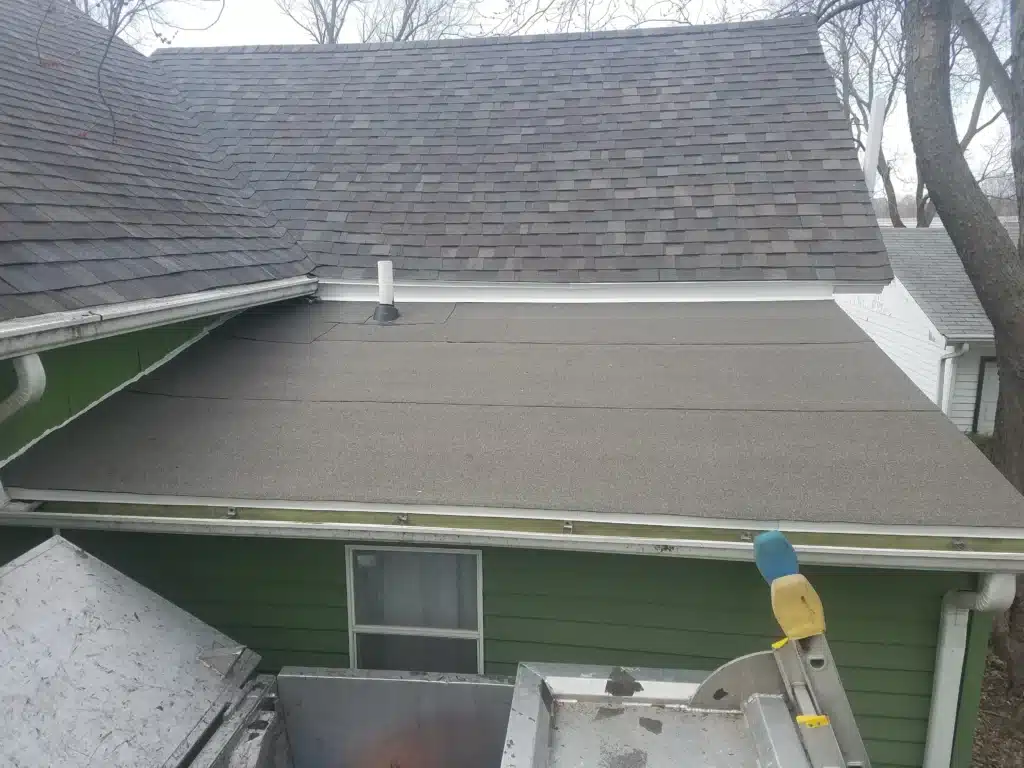
What a professional flat roof inspection covers:
- Membrane surface condition (cracking, blistering, alligatoring, shrinkage)
- Seam and lap integrity
- Flashing condition at walls, curbs, and penetrations
- Drain screen clearing and drainage function verification
- Edge metal and termination bar condition
- Interior ceiling inspection for signs of active or previous leaks
- Photographic documentation of all findings
Combining a flat roof maintenance program with our Roof Maxx treatment services can significantly extend the life of compatible systems and is far more cost-effective than emergency repairs or early replacement.
Frequently Asked Questions:
How long do flat roofs last in Western North Carolina?
It depends on the system. TPO typically lasts 15 to 25 years with proper installation and maintenance. EPDM can reach 20 to 30 years. Modified bitumen ranges from 15 to 20 years. When properly maintained, built-up roofing Services can last 25 to 30 years. Spray polyurethane foam with regular recoating can last indefinitely. WNC’s heavy rainfall and freeze-thaw cycling can shorten these ranges if the roof isn’t maintained or if drainage problems go unaddressed.
How much does flat roof replacement cost?
Flat roof costs vary significantly based on system type, roof size, accessibility, condition of the existing deck, and drainage requirements. We don’t publish price ranges because too many variables affect the actual number. Secure Roofing Services provides free estimates with no obligation — call 828-888-ROOF to schedule.
Do flat roofs work in cold mountain climates?
Yes, with the right system. EPDM is particularly well-suited to cold climates because it stays flexible at low temperatures. SBS-modified bitumen is also a strong performer in freeze-thaw conditions. The key is proper insulation beneath the membrane and well-designed drainage that prevents ice damming at drains and scuppers.
Does Secure Roofing offer financing for flat roof projects?
Yes. We’ve partnered with Service Finance and Advancial Federal Credit Union to provide flexible financing options, including a 12-month same-as-cash option through Advancial. See our financing page for details. We also offer discounts for veterans, first responders, and seniors.
How do I know if my flat roof needs inspection?
If you’ve had a major storm, see water stains on interior ceilings, notice blistering or bubbling on the roof surface, or simply can’t remember the last time the roof was inspected — call us. A flat roof inspection from Secure Roofing Services is free and straightforward.
Why Secure Roofing for Flat Roof Work in Asheville, NC
There are plenty of contractors who will take on a flat-roof job. Fewer have the specific experience with WNC’s climate conditions, the range of system knowledge to recommend the right membrane for your building, and the commitment to stand behind their work.
Secure Roofing is locally owned and operated, based in Asheville at 45 Gaston Mountain Rd. We serve property owners across Western North Carolina, Hendersonville, Brevard, Black Mountain, Waynesville, Canton, Mars Hill, and dozens of communities in between — as well as the South Carolina upstate. Our team is fully licensed and insured, and we back our installation work with a workmanship guarantee.
We offer free estimates and free second opinions. We work with all insurance companies. We’re available 24/7 for emergency response when weather events create urgent roofing Services situations.
828-888-ROOF | Schedule service online | View financing options