Flat Roof vs. Metal Roof for Commercial Buildings: Making the Switch in WNC
A lot of commercial buildings in Western North Carolina were built with flat or low-slope roofing because it was standard practice and cost-effective at the time. It’s a system that works — until it doesn’t. The combination of heavy seasonal rainfall, freezing temperatures, and significant snowfall in the higher elevations around Asheville puts flat roofing systems under real stress over time.
When building owners in the region start looking at flat roof vs. metal roof for commercial buildings, the question isn’t just about materials. It’s about what makes sense for a structure that needs to perform reliably in mountain conditions for the next several decades. This page breaks down both systems honestly so you can make an informed decision.
How Flat Roofing Works on Commercial Buildings
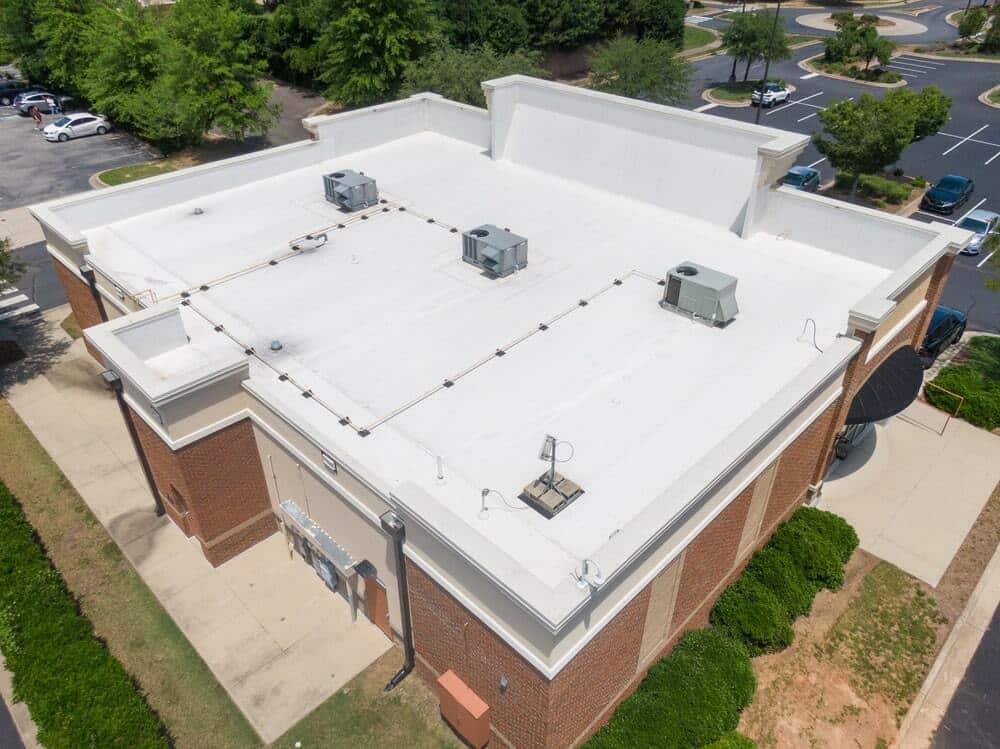
Flat commercial roofs — technically low-slope roofs with a pitch of 2:12 or less — rely on a membrane system to keep water out. The most common types in the Asheville area and throughout WNC include built-up roofing (BUR), modified bitumen, TPO (thermoplastic polyolefin), and EPDM (ethylene propylene diene monomer).
Each of these flat roof vs. metal roof systems depends on the integrity of a continuous membrane layer. Water drains toward internal drains or scuppers rather than shedding off the edges, which means proper drainage design is critical. When drains clog or the membrane develops even small punctures or seam failures, water pools and problems compound quickly.
Flat roofing is common on commercial buildings for good reasons: it’s generally less expensive upfront, it provides accessible space for HVAC equipment and rooftop units, and installation is straightforward on the right building type.
The limitations become more pronounced in mountain climates. Ponding water, freeze-thaw stress on membrane seams, and the weight of accumulated snow and ice create conditions that accelerate wear on flat roofing systems in WNC faster than they would in a lower-elevation, milder climate.
How Commercial Metal Roofing Works
Metal roofing for commercial buildings uses interlocking panels — most commonly standing seam or structural metal panels — installed over a solid deck or retrofit framing system. The pitch, even when modest, sheds water and snow rather than holding it.
Standing seam metal systems use concealed fasteners, which eliminate one of the most common leak pathways on older metal buildings. Structural metal panels are screwed down and used primarily on industrial or agricultural applications. For most commercial buildings in the Asheville area, making the flat roof vs. metal roof conversion, standing seam is the standard recommendation.
Metal roofing is available in steel, aluminum, copper, and various alloys. Steel panels with high-quality coatings are the most common choice for commercial applications in WNC, offering the right balance of durability and cost. Secure Roofing’smetal roofing options include multiple panel profiles and finishes suited to different building types and aesthetic requirements.
Flat Roof vs. Metal Roof: Direct Comparison
When commercial building owners in Western North Carolina weigh flat roof vs. metal roof options, these are the factors that matter most:
Lifespan
Flat membrane systems typically last 15-25 years under good conditions with consistent maintenance. TPO and EPDM can reach the higher end of that range with proper care. Metal roofing systems installed correctly by a licensed contractor have an expected service life of 40-60 years. Steel standing seam systems on commercial buildings often reach 50+ years before requiring replacement.
Over the life of a commercial building, the flat roof vs. metal roof lifespan difference means a building owner may replace a flat roof two or three times for every one metal roof installation.
Maintenance Requirements
Flat roofing requires regular inspection and maintenance. Drains need clearing. Membrane surfaces need inspection for punctures, blisters, and seam separations. Flashing around penetrations and HVAC curbs needs periodic attention. Deferred maintenance on a flat roof leads to water intrusion faster than most building owners expect.
Metal roofing maintenance is minimal by comparison. Periodic inspection for fastener integrity (on screw-down systems) and clearing debris from valleys and gutters covers most of what metal needs. Standing seam systems with concealed fasteners have even fewer maintenance touchpoints.
Performance in WNC Weather
This is where the flat roof vs. metal roof comparison tilts most clearly toward metal for Western North Carolina commercial properties. The region averages 45-50 inches of rainfall annually, with higher totals in the mountain communities above Asheville. Freeze-thaw cycles stress flat membrane seams. Heavy snowfall creates load and ice dam conditions that flat drainage systems aren’t designed to manage well.
Metal roofing sheds precipitation rather than managing it through drainage. Standing seam panels handle thermal expansion without fastener fatigue. Metal roofs rated to 140 mph wind resistance perform reliably through the storm events that periodically affect the region.
Upfront Cost
Flat roofing wins on initial installation cost. A new flat membrane system on a commercial building costs less up front than a comparable metal installation. This is why flat roofing remains common on new commercial construction, where the initial budget is the primary driver.
The flat roof vs. metal roof cost comparison shifts significantly over time. Lower maintenance costs, avoided repairs, and a longer service life often make metal the more cost-effective choice when evaluated on a 20-30 year total cost of ownership basis.
Energy Efficiency
Modern flat roofing membranes, particularly white TPO, offer good solar reflectance. Metal roofing with infrared-reflective finishes also performs well in terms of energy efficiency. Both systems can reduce cooling loads compared to older dark-surface roofing.
Metal has an edge in WNC specifically because of winter performance. Better insulation integration during a metal roof installation or retrofit can reduce heating loads in buildings where that’s a meaningful operating cost.
The Case for Converting: When Switching Makes Sense
Not every commercial building with a flat roof should convert to metal. But there are clear situations where the flat roof vs. metal roof decision points toward making the switch:
Your flat roof has a history of recurring leaks. When water is finding multiple entry points despite repeated repairs, the membrane has deteriorated past the point where continued repairs are a sound investment. Conversion to metal stops the cycle.
Your roof is approaching or past its expected service life. A flat roof at 20+ years that needs replacement anyway is an ideal candidate for conversion. The replacement is happening regardless — the question is whether you install another flat system or upgrade to metal.
You’re dealing with chronic drainage problems. Some commercial buildings in WNC have flat roof drainage designs that simply don’t perform well in the region’s rainfall environment. Converting to a metal system with a positive slope solves the drainage problem structurally rather than managing it with maintenance.
Your building will be in service for 30+ more years. The economics of flat roof vs. metal roof for commercial buildings favor metal significantly when evaluated over a long timeframe. If the building is going to need a second replacement anyway, doing metal now avoids that future cost.
You want to reduce ongoing maintenance demands. Property managers and owner-operators who want a lower-maintenance roof envelope consistently prefer metal once they understand the long-term difference in attention required.
Minimizing Disruption During Conversion
Commercial building owners in Western North Carolina consistently ask about keeping their operations running during a roof conversion project. The answer is that with good planning, most businesses can continue operating throughout.
Phased project scheduling allows work to proceed in sections, keeping unaffected building areas fully operational. For retrofit projects over existing flat roofs, the tearoff phase is minimized or eliminated, reducing the window when the roof deck is exposed. Secure Roofing coordinates work schedules around your business hours and operational requirements from the start of the project.
Frequently Asked Questions
Is converting from a flat to a metal roof worth the investment for commercial buildings in WNC?
For most commercial buildings in Western North Carolina, yes. The flat roof vs. metal roof comparison over a 30-year period typically favors metal when you account for reduced maintenance, avoided repair costs, and a longer service life before the next replacement is needed. The mountain climate specifically benefits from metal’s superior drainage and weather performance.
Will a metal roof affect my commercial property insurance?
It may. Some commercial property insurers offer favorable terms for metal roofing due to its fire resistance, wind resistance ratings, and hail performance. It’s worth contacting your carrier as part of evaluating the flat roof vs. metal roof decision. Secure Roofing works with all insurance companies and can provide documentation to support your coverage review.
Does Secure Roofing handle commercial projects outside Asheville?
Yes. Secure Roofing serves commercial properties throughout Western North Carolina, including Hendersonville, Waynesville, Black Mountain, Brevard, and the surrounding mountain communities. View our fullservice areas for the complete list of locations we cover.
Talk to a Commercial Roofing Contractor Who Knows WNC
If you’re weighing flat roof vs. metal roof for your commercial building in Western North Carolina, Secure Roofing can help you work through the decision honestly. We’re a locally-owned, licensed, and insured roofing contractor with over a decade of experience serving commercial and residential properties in the region.
Free estimates and consultations with no obligation. Call 828-888-ROOF orcontact our team to schedule your commercial roof assessment.