
Roof Maintenance by Material: Specific Care for Every Roof Type
Roof Maintenance by Material: Care for Every Roof Type
What works for one roof can be completely wrong for another. Roof maintenance by material is not a marketing phrase — it reflects a real technical reality. Asphalt shingles fail through granule loss and UV degradation. Metal roofs stay strong for decades, but their fasteners and sealants need steady attention. Tile roofs can outlast the house, but the underlayment beneath them wears out every 20 to 30 years. Flat roofs live or die by drainage.
Treating every roof the same is how good roofs fail early, and expensive problems get missed. Across Western North Carolina, we see the consequences of that mistake regularly. This guide covers roof maintenance by material for every major roof type used in WNC homes and commercial buildings — what each material actually needs, why, and when to call a professional before small issues become large ones.
If you are not sure what is on your roof right now, start with the identification section below. Everything else builds from that.
How to Identify Your Roof Material Before You Do Anything Else 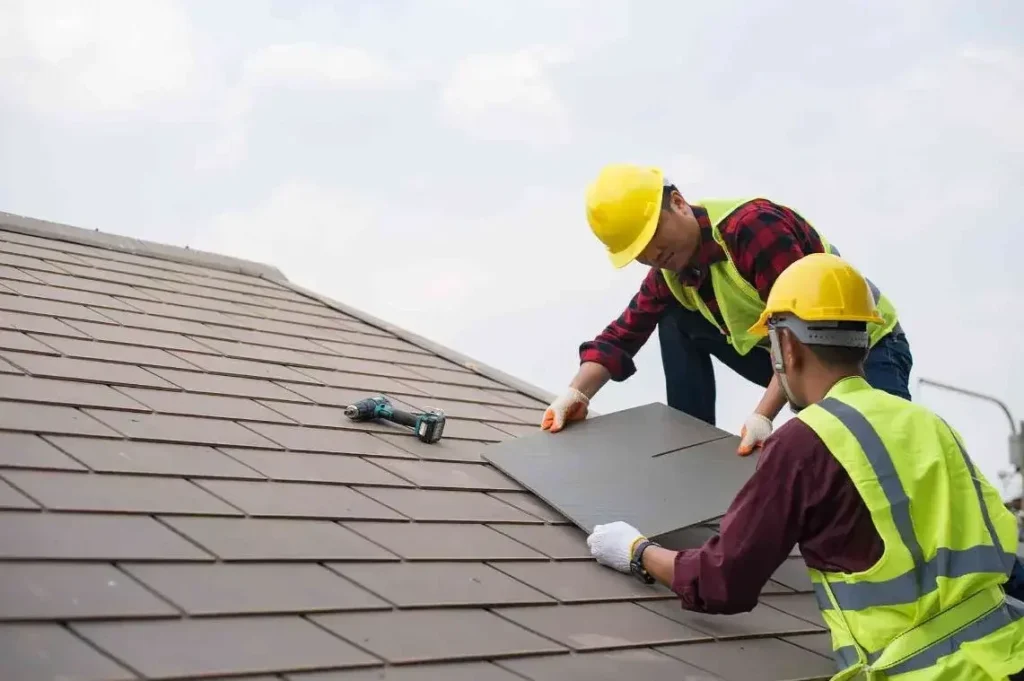
Understanding roof maintenance by material starts with knowing what you are maintaining. Most homeowners can make a confident identification from the yard or driveway.
Asphalt shingles are the most common residential material in WNC. They look like overlapping rectangular tabs, typically in gray, brown, or charcoal tones, with a slightly textured surface from embedded granules. Three-tab shingles have a flat, uniform appearance. Architectural shingles (also called dimensional or laminate shingles) have a thicker, layered look that mimics wood shake.
Metal roofing shows up in two main styles. Standing seam metal has visible raised seams running vertically up the roof slope with no exposed fasteners. Screw-down metal panels (also called corrugated or ribbed metal) have fasteners visible at each panel. Both are common in WNC, particularly on mountain properties and commercial buildings.
Tile roofing includes both clay and concrete tiles. Clay tiles have a warmer reddish or terra-cotta appearance. Concrete tiles can mimic clay or slate. Both have a hard, curved, or flat profile and a distinct, solid sound when tapped.
Flat and low-slope roofing appears on commercial buildings, additions, and some contemporary homes. TPO is typically white or light gray. EPDM is black rubber. Modified bitumen may have a granulated or smooth surface. Built-up roofing (BUR) often has a gravel topping.
Slate is dense, smooth, and dark — typically gray, black, or greenish. Individual slats are hard and produce a sharp ring when tapped. Slate roofs are rare but present in older WNC homes.
Wood shake and shingles have a natural, weathered appearance with visible grain lines. Over time in WNC’s humid climate, wood shakes darken significantly, and moss accumulation is common.
If you are still unsure after looking, send a photo to your roofing contractor. Any experienced local roofer can identify your material immediately from a clear image. Getting this right before scheduling maintenance or repairs matters — the wrong approach on the wrong material can cause more harm than good.
Asphalt Shingle Roof Maintenance
More homes in Western North Carolina are covered with asphalt shingles than any other material, and roof maintenance by material for asphalt starts with understanding how these shingles actually age.
Why Asphalt Shingles Fail the Way They Do
Granule loss is the primary aging mechanism. Those small stone granules embedded in the shingle surface protect the asphalt beneath from UV radiation. As granules shed over time, the asphalt oxidizes, dries out, and cracks. WNC’s humid summers accelerate a second problem: algae and moss growth. Both are common here, and both hold moisture against the shingle surface, speeding up deterioration.
Seal strip failures create another vulnerability. Each shingle has an adhesive strip that bonds it to the shingle below. Heat activates that bond during installation, but age and thermal cycling weaken it over time. When seal strips fail, shingles can lift in the wind, and WNC sees plenty of wind, especially at higher elevations.
Asphalt Shingle Maintenance Schedule
Twice-yearly inspections are the standard for good asphalt shingle roof maintenance — once in spring after winter weather, and once in fall before the next cold season. Add a post-storm inspection after any significant hail, wind event, or heavy ice.
During each inspection, look for:
- Granule accumulation in gutters and downspout discharge areas
- Curling, cupping, or lifted shingle edges
- Missing shingles or exposed decking
- Exposed nail heads or popped fasteners
- Dark staining from algae or visible moss growth
- Damaged or lifted flashing at chimneys, vents, and valleys
Gutter maintenance connects directly to shingle maintenance. Clogged gutters cause water to back up under shingles at the eave, leading to rot in the roof deck and premature shingle failure. Clean gutters in late fall after leaves drop and again in spring.
For algae and moss, zinc strip treatment applied annually is effective in WNC’s climate. Installing zinc or copper strips near the ridge allows rain to carry trace amounts of metal down the roof, inhibiting biological growth over time. Once moss is established, professional removal is the right approach — pressure washing asphalt shingles dislodges granules and accelerates aging.
Common Asphalt Shingle Problems and What They Mean
Curling and cupping usually point to a ventilation problem, not just shingle age. Heat and moisture trapped in the attic cause shingles to deform. Replacing the shingles without addressing ventilation means the new shingles will curl too. Address the cause, not just the symptom.
Blistering — small raised bubbles on the shingle surface — typically results from trapped moisture in the shingle during manufacturing or poor attic ventilation. Minor blistering that has not broken open is cosmetic. Broken blisters expose bare asphalt and need attention.
Missing shingles require prompt replacement. Exposed roof decking deteriorates quickly in WNC rain. What looks like a minor cosmetic problem becomes structural damage within months if left alone.
Fastener issues — popped nails or exposed screw heads — need resealing immediately. Water entering around a fastener travels under the shingle and into the deck.
Extending the Life of Your Asphalt Shingle Roof
Proper attic ventilation is the single biggest factor in asphalt shingle lifespan. A poorly ventilated attic can cut 5 to 10 years off a shingle’s life expectancy through heat and moisture buildup.
Roof Maxx rejuvenation treatment — a plant-based bio-oil applied to aging shingles — can add meaningful years to a roof at the 10 to 15 year mark. At a fraction of replacement cost, it restores flexibility to dried-out asphalt. Learn more about Roof Maxx service from Secure Roofing.
For existing roof repair needs that come up during inspections, addressing them promptly is the most cost-effective decision you can make. Small repairs completed now prevent the damage that forces early roof replacement.
Metal Roof Maintenance
Metal roofing earns its reputation for durability, and roof maintenance by material for metal reflects that reality. The metal panels themselves rarely fail. Fasteners, sealants, and coatings are where most metal roof problems start.
Standing Seam vs. Screw-Down: Different Maintenance Priorities
These two metal roof systems have fundamentally different maintenance needs.
Standing seam panels interlock at raised seams with no exposed fasteners. This design eliminates one of the most common failure points. Maintenance focus shifts to seam integrity, clip condition, and sealant at penetrations. Annual inspection of seams and edge conditions is sufficient for most standing seam roofs, with closer attention to penetrations like pipes, vents, and HVAC equipment.
Screw-down metal panels have fasteners exposed at every panel. Each fastener has a rubber washer that seals the hole. Over time, those washers deteriorate — they compress, crack, and lose their seal. On a 2,000-square-foot screw-down metal roof, there can be 1,000 or more fasteners. Annual inspection with attention to backing-out screws and deteriorating seals is essential.
Metal Roof Maintenance Schedule and Focus Areas
Annual inspection is the standard for metal roof maintenance by material, with particular attention to:
- Fastener condition (screw-down systems): back-out, loose screws, and seal deterioration
- Sealant around all penetrations: vents, pipes, HVAC curbs, skylights
- Surface condition: scratches, chips, and any rust spots
- Coating and finish assessment: fading, chalking, or delamination
- Panel seams (standing seam): any lifting, separation, or cracking
- Gutter and drainage connections: Metal roofs shed water quickly, and gutter performance matters
Surface rust deserves immediate attention. A small rust spot treated early stays a small problem. Left alone, rust spreads under the coating and becomes a structural issue on the panel. Treat with rust converter, prime, and touch up the coating.
Coating and finish assessment should happen every 5 to 7 years. When fading or chalking becomes visible, recoating adds significant life to the system at a fraction of replacement cost. A metal roof that receives proper coating maintenance can remain watertight for 50 years or more.
Hail and Metal Roofing
Hail denting on metal roofing is primarily cosmetic on most panel systems — the panel itself remains watertight after a hail strike. However, document any hail damage with photos and a professional inspection report. Insurance claims for hail damage require documentation, and having that record matters if you need to file.

Tile Roof Maintenance
Clay and concrete tile roofs last an extraordinarily long time — individual tiles regularly survive 50 to 100 years or more. But roof maintenance by material for tile requires understanding a critical distinction: the tiles almost never fail, but the system beneath them does.
The Underlayment Problem Every Tile Roof Owner Should Know
The underlayment is a waterproofing layer installed beneath the tiles. It handles the actual water resistance of the system. Tile underlayment typically lasts 20 to 30 years — far shorter than the tiles above it. When underlayment fails, water enters the structure. The tiles may look perfect from the street, while the roof is leaking.
This means tile roof maintenance by material must include periodic underlayment assessment, not just tile inspection. If your tile roof is approaching 20 years, an underlayment evaluation by a qualified professional is worth scheduling, even if the tiles look fine.
Tile Roof Maintenance Requirements
Tile roofs require specialized inspection techniques. Walking on tiles without proper training causes cracking — both from direct foot pressure and from tiles shifting and rubbing against each other. Legitimate tile roof inspections use drones, long-reach inspection poles, or specific step placement techniques that trained professionals know.
Twice-yearly inspection is recommended, always performed by someone with tile roof experience. Key inspection points:
- Broken or cracked tiles: replace promptly to prevent underlayment exposure
- Valley and flashing condition: water management at transitions is critical on tile systems
- Ridge and hip mortar (for mortar-set systems): check every 5 to 10 years for cracking and deterioration
- Debris accumulation in valleys: organic material holds moisture and accelerates underlayment wear
- Gutter condition: tile roofs shed heavy water volume during WNC storms
Broken tiles need prompt replacement. An exposed underlayment opening allows water to work in and deteriorate the decking below. The repair itself is usually straightforward — the urgency is simply in doing it quickly.
Extending a Tile Roof’s Life
Underlayment renewal at 20 to 30 years extends the system significantly. Many tile roofs go through two or even three underlayment cycles while the original tiles remain in service. The cost is substantially less than a full tile replacement, and when done correctly, the roof performs like new.
Professional maintenance contracts are particularly valuable for tile roofs. Given the specialized techniques required and the cost of getting it wrong, having an experienced contractor on a regular inspection schedule makes sense.
Flat and Low-Slope Roof Maintenance
Flat and low-slope systems are common on commercial buildings, additions, and some WNC homes with contemporary architecture. Roof maintenance by material for flat roofing centers almost entirely on one factor: drainage.
Why Drainage Defines Flat Roof Performance
Flat roofs are not truly flat — they have slight slopes (typically 1/4 inch per foot or more) designed to move water toward drains and scuppers. When those drainage pathways get blocked, water ponds. Ponding water weighs approximately 5 pounds per square foot — a significant structural load that was not in the design calculations. More critically, ponded water accelerates membrane deterioration dramatically. A flat roof that drains well and is well-maintained can serve a commercial building for 20 to 30 years. One that regularly holds standing water may need attention at 10.
Flat Roof Materials and Their Specific Needs
TPO (Thermoplastic Polyolefin) is the most common flat roof material on newer WNC commercial buildings. White or light gray, TPO reflects solar heat well. Maintenance focus: seam integrity (heat-welded seams are strong but require periodic inspection), membrane penetrations, and edge flashings.
EPDM (Ethylene Propylene Diene Monomer) is a synthetic rubber membrane, typically black. Very durable and flexible in temperature extremes. Maintenance focus: seam adhesive condition, punctures (EPDM repairs easily when damage is caught early), and edge termination bars.
Modified bitumen includes a reinforcement layer that adds puncture resistance. Maintenance focus: seam condition, surface granule coverage, and any blistering or ridging in the membrane.
Flat Roof Maintenance Schedule
Quarterly inspection is the standard recommendation for flat and low-slope systems — more frequent than sloped roofs because drainage blockages and membrane damage can cause serious problems quickly.
Each inspection should include:
- Drain and scupper clearing: remove all debris from drainage paths before it rains
- Membrane inspection: look for punctures, seam separation, blistering, or ridging
- Edge and flashing inspection: lifting edges allows water to enter at the perimeter
- Ponding water assessment: water should drain completely within 48 hours of rainfall
- Debris removal: leaves, branches, and organic material hold moisture against the membrane
Any ponding water that persists beyond 48 hours after rain indicates a drainage problem that needs professional evaluation. Do not wait on this.
Extending Flat Roof Life with Coating Systems
Elastomeric coating systems applied at 10 to 15 years add 5 to 10 additional years to a flat roof’s service life at approximately 20 to 30 percent of full replacement cost. This is one of the strongest ROI maintenance investments available for commercial property owners.
If a flat roof is reaching the end of its life, restoration with a coating system is worth evaluating before committing to full tear-off and replacement. Contact our team for a flat roof assessment across our WNC service area.
Other Roof Materials: Slate and Wood Shake
Slate Roofing Maintenance
Slate is the closest thing to a permanent roof that exists. The slate itself is essentially indestructible — individual slates from roofs installed 100 years ago are often still performing. Roof maintenance by material for slate shifts almost entirely to the surrounding system: flashings, fasteners, and any broken slats.
Flashings and fasteners are where slate roof failures begin. Lead and copper flashings age and eventually need replacement. Fasteners can corrode or loosen over decades. Regular inspection of these components is the core of slate maintenance.
The inspection itself requires expertise. Walking on a slate roof without proper technique causes cracking. Most general roofing contractors are not trained on slate. If you have a slate roof, seek a contractor who specifically lists slate experience.
Drone inspection is a reasonable option for slate — it provides a comprehensive view without any contact risk. When slats are broken, replace them promptly to protect the underlayment and decking beneath.
 Wood Shake and Shingle Maintenance
Wood shake is the most maintenance-intensive roofing material in WNC’s climate — no other material requires the level of ongoing care that wood shake demands in a humid mountain environment.
The reason is biological. WNC’s warm, wet summers provide ideal conditions for moss, algae, and fungal growth. Without active preventive treatment, a wood shake roof in this region will develop significant moss coverage within 5 to 10 years. Moss holds moisture against the wood, accelerates rot, and dramatically shortens the roof’s life.
Wood shake maintenance requirements:
- Treatment schedule: every 3 to 5 years with wood preservative and fungicide
- Annual cleaning to remove debris accumulation (leaves and pine needles hold moisture)
- Semi-annual inspection for cracked, split, or missing shakes
- Gutter maintenance: debris from wood shake roofs clogs gutters faster than other materials
If you have a wood shake roof that has not been treated in more than 5 years, schedule an inspection and treatment before the next wet season. Catching early moss growth and rot is far less expensive than dealing with advanced deterioration.
Material-Specific Maintenance Costs: What to Budget
Understanding roof maintenance by material helps you budget accurately over a roof’s service life. Here is a practical cost framework for WNC homeowners and commercial property owners.
| Material | Annual Maintenance Investment | 20-Year Maintenance Total | Cost of Premature Replacement |
| Asphalt Shingles | $200–400 | $4,000–8,000 | $8,000–12,000 |
| Metal Roofing | $150–300 | $3,000–6,000 | $15,000–25,000 |
| Tile Roofing | $300–600 | $6,000–12,000 | $20,000–40,000 |
| Flat/Low-Slope | $400–800 | $8,000–16,000 | $8,000–15,000 |
| Slate | $200–500 | $4,000–10,000 | $30,000–60,000+ |
| Wood Shake | $400–800 | $8,000–16,000 | $10,000–18,000 |
The most important column is the last one. Roof maintenance by material is ultimately a cost-avoidance strategy. Annual maintenance on a metal roof costs $150 to $300. Replacing that same metal roof prematurely costs $15,000 to $25,000 or more. The math is straightforward.
For commercial property owners, roof maintenance costs need to be viewed against the cost of interior water damage from a failed roof, which regularly exceeds the cost of the roof itself when equipment, inventory, or tenant disruption is involved.
Financing is available for larger repair or replacement projects when needed. Learn about financing options from Secure Roofing’s lending partners.
If your roof is approaching the end of its useful life or you are evaluating whether repair or replacement makes more sense, our team can walk through both options honestly. Explore our roof replacement services or schedule a roof installation consultation for a no-obligation assessment.
Frequently Asked Questions
How do I know what roofing material I have?
Most homeowners can identify their material from the yard. Asphalt shingles have a granular texture in overlapping rectangles. Metal roofs show either raised seams or visible screw fasteners. Tile is hard and curved or flat with a solid appearance. Flat roofing is visible on low-slope structures. If you are still unsure, send a photo to a local roofing contractor — they can identify it immediately. Getting this right is the starting point for any roof maintenance by material plan.
Which roof type requires the least maintenance?
Metal roofing has the lowest maintenance requirements relative to service life. A well-installed standing seam metal roof can go decades with nothing more than annual inspection and periodic sealant attention. The initial investment is higher than that of asphalt, but the long-term maintenance cost is lower than that of any other common material.
Which roof type requires the most maintenance?
Wood shake roofs in WNC require the most ongoing attention. The combination of humidity, rain, and warm summers creates near-ideal conditions for moss and fungal growth. Without active treatment every 3 to 5 years and consistent debris clearing, wood shake roofs deteriorate significantly faster than their rated lifespan.
Can consistent maintenance actually double my roof’s lifespan?
For asphalt shingles, yes — in some cases. A 20-year shingle that receives twice-yearly inspections, prompt repairs, proper ventilation, and algae treatment can easily reach 30 to 35 years. For metal and tile, maintenance preserves what is already a long lifespan rather than dramatically extending it. For flat roofing, consistent maintenance combined with a coating system at 10 to 15 years can realistically double the service life.
How often should I have my roof professionally inspected?
The standard recommendation varies by material. Asphalt shingles: twice yearly, plus after major storms. Metal roofing: annually. Tile: twice yearly by a contractor trained on tile. Flat and low-slope: quarterly. Slate: annually, with a contractor experienced in slate. Wood shake: twice yearly. These are baseline recommendations — WNC’s weather patterns, particularly the storm seasons, often justify additional post-event inspections.
Is it worth getting a maintenance contract with a roofing contractor?
For commercial flat roofs and tile roofs, a professional maintenance contract is a strong investment. Both material types involve specialized inspection requirements and the cost of missed problems is high. For residential asphalt and metal roofs, annual professional inspections are a reasonable middle ground — many homeowners handle visual inspections themselves between professional visits.
What happens if I skip maintenance for a few years?
The consequences depend on the material. For asphalt shingles, skipped maintenance typically shows up as algae growth, granule loss acceleration, and small issues (loose flashings, cracked caulk around penetrations) that develop into leaks. For flat roofs, deferred gutter and drain maintenance can cause ponding water that damages the membrane within a single season. Metal roofs are most forgiving of short-term deferred maintenance, though fastener issues can develop quietly.
Protect What Is Over Your Head
Roof maintenance by material is not complicated, but it does require knowing what you have and staying consistent with the specific care that material needs. An asphalt shingle roof maintained properly over its life costs far less than one that reaches early failure. A metal roof with annual fastener attention performs for decades. A tile roof with proper underlayment monitoring can outlast multiple generations of homeowners.
Across Western North Carolina, Secure Roofing provides material-specific maintenance and inspection services for every roof type covered in this guide. We are a locally-owned, licensed, and insured roofing contractor serving Asheville, Hendersonville, Brevard, Black Mountain, Waynesville, and communities throughout WNC and the South Carolina upstate.
Whatever is on your roof, we know how to take care of it.
Call 828-888-ROOF or request a free estimate online.